
Analyzing a hand in the Lab
The full walkthrough: hole cards, board, villain range, action, verdict, then the next street.
Six steps, from the hand to the verdict. Budget three minutes the first time, thirty seconds once it becomes a habit.
1. Enter your hole cards
Pick your two cards in the card picker. A♠ J♥, for example.
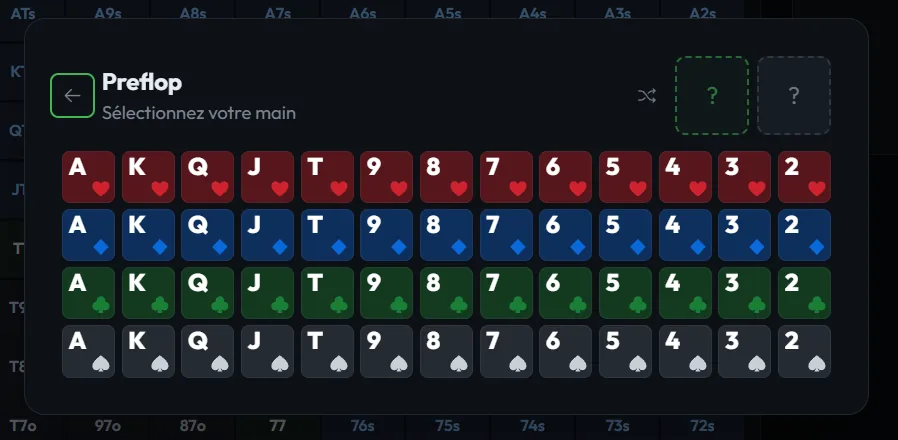
2. Set the board
For a postflop spot, enter the community cards. You can stop at the flop, go to the turn, or lay out the full board through the river. For a preflop spot, leave the board empty.

3. Assign the villain's range
This step decides the quality of everything else. Use the 13×13 matrix to select the hands the villain can have here. You can:
- click hands one by one to add or remove them
- start from a preset range (tight, medium, wide) and adjust
- filter by category (pairs, suited connectors, broadway…)
- weight combos if the villain plays some hands at a reduced frequency
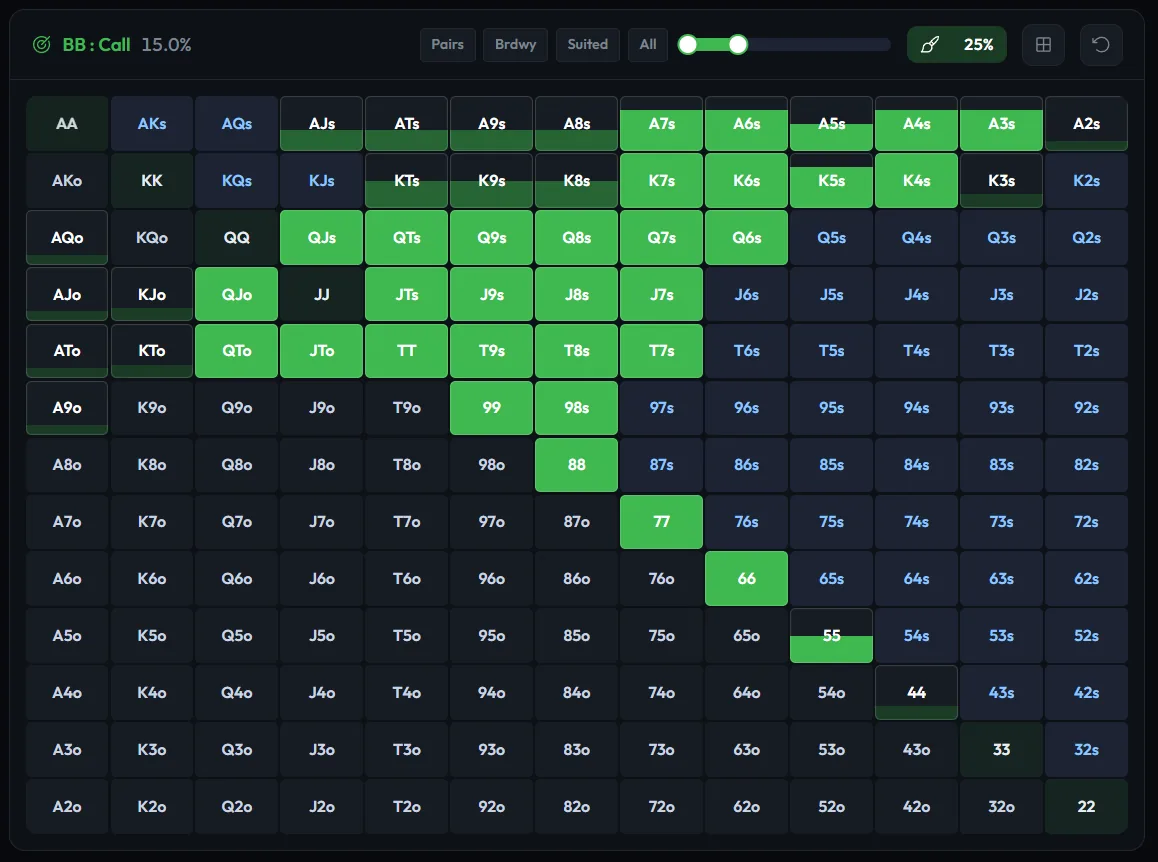
The chapter on the villain's range covers this step in depth.
4. Enter the action
Spell out what the villain did: "Villain bets 15 into 100", for instance. GrindLab derives pot odds, MDF and equity vs callers from it.
5. Read the verdict
GrindLab answers plainly: how much equity you have, how much you need, and whether the action is profitable. No range of outcomes, no ambiguity.
If the verdict surprises you, do not change your conclusion straight away: look at the composition bar first. Nine times out of ten the surprise comes from the range you assigned, not from the maths.
6. Move to the next street
Add the turn card, remove from the villain's range the hands that would not have continued, and recalculate. Then the river. GrindLab tracks your equity street by street, which makes the exact moment the hand turned visible.

Three common mistakes
Keeping the same range from preflop to river. A villain who barrels three streets no longer holds their opening range. Narrow it every street; that is where most of the accuracy lives.
Looking only at the equity percentage. 45% against a polarized range and 45% against a range of middling pairs do not call for the same play.
Analyzing the hands you were sure about. The hands that teach you something are the ones where you hesitated. The rest is comfort.