GrindLab Blog
Exploitative poker strategy, hand analysis, and tips to crush your opponents.
GrindLab
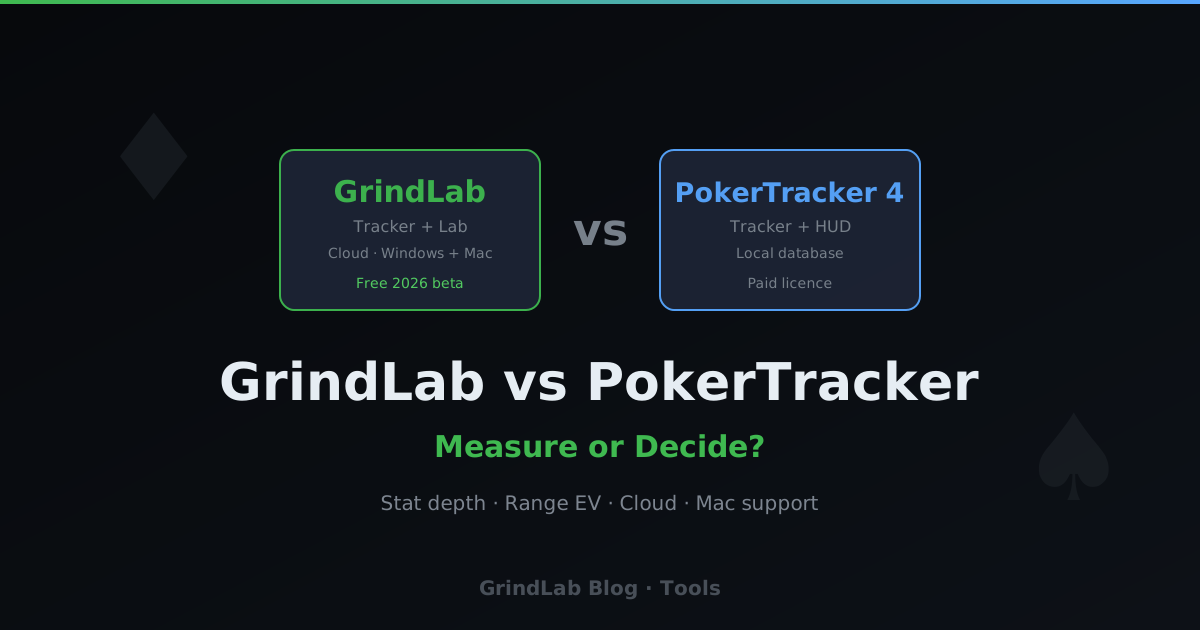
GrindLab vs PokerTracker 4: Which Tracker Helps You Improve?
PokerTracker 4 and Holdem Manager 3 are the tracking benchmarks. GrindLab attacks the problem from the other end. An honest comparison of both approaches.
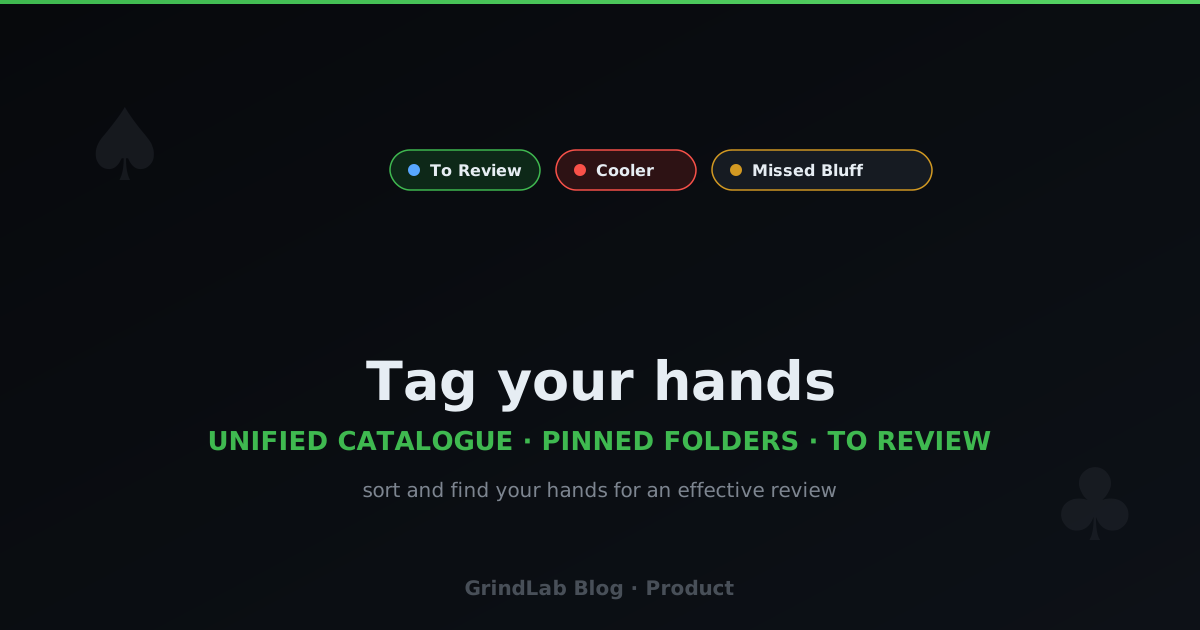
Tag and Organize Your Poker Hands for Effective Review
Tag your hands with a unified catalogue, coloured badges and a dedicated filter, pin tags as sidebar folders, and import only what you flagged.
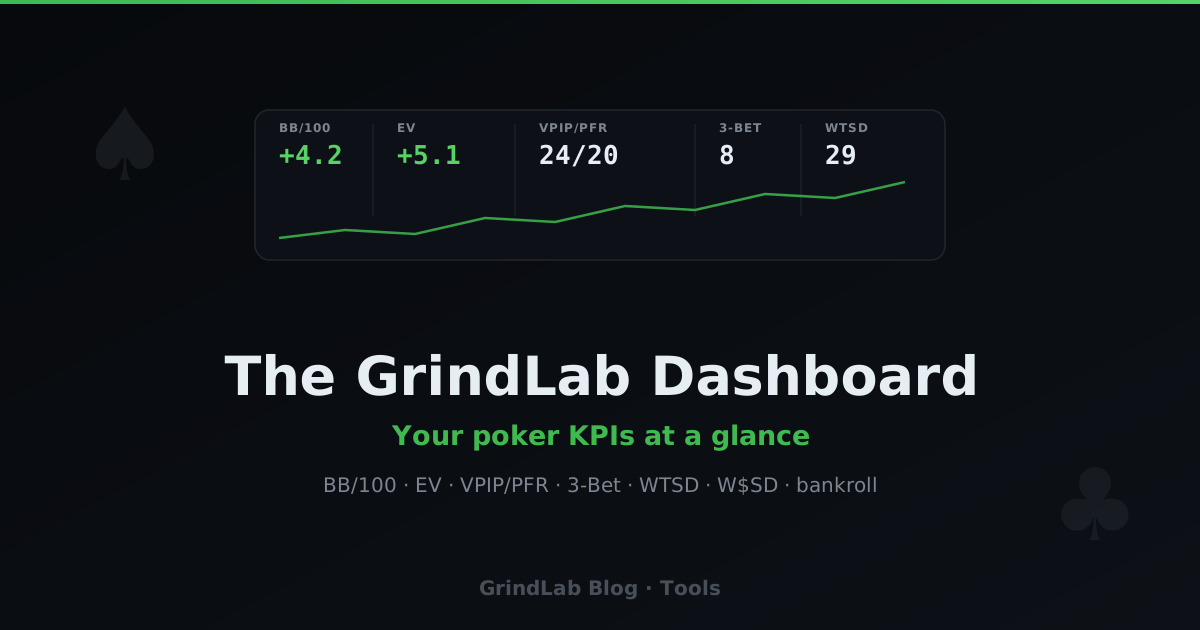
The GrindLab dashboard: your poker KPIs at a glance
The GrindLab dashboard sums up your game on one page: BB/100, EV, VPIP, PFR, 3-Bet, WTSD and a bankroll curve. What a healthy value looks like.
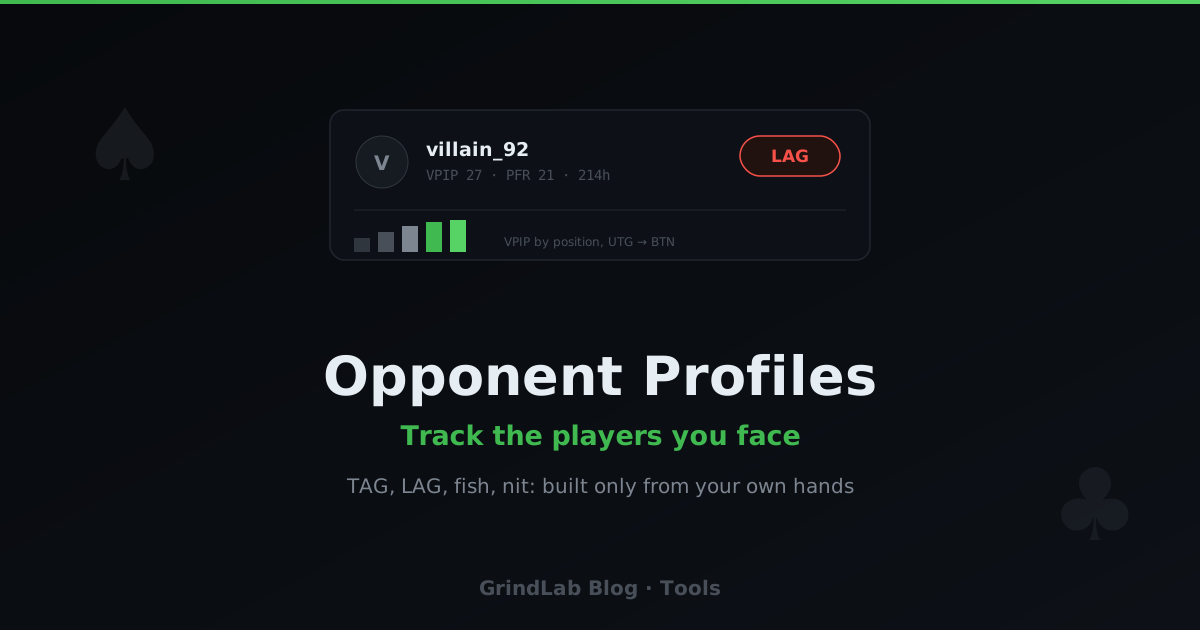
Opponent profiles: track the players you face in poker
GrindLab's Players page aggregates your hands against every villain you have faced and lets you tag them TAG, LAG, fish or nit. How to exploit each.
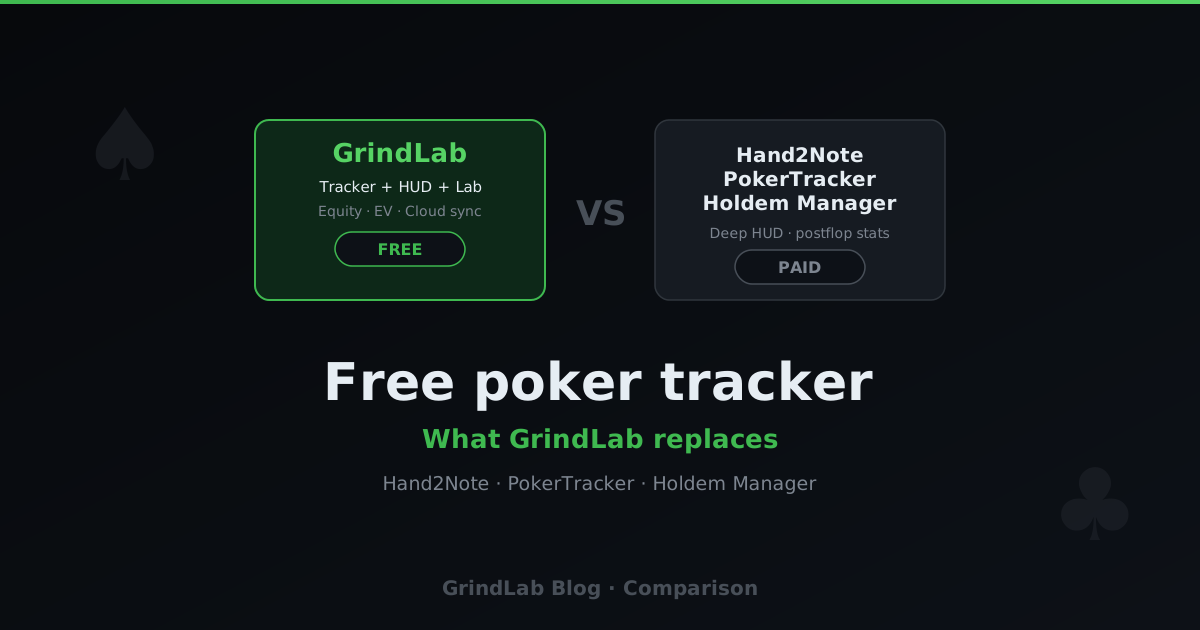
Free poker tracker: what GrindLab replaces (Hand2Note, PokerTracker, Holdem Manager)
GrindLab is a free poker tracker: live HUD, stats, sessions, tournament results and opponent profiles in one cloud app. Here is what it replaces.
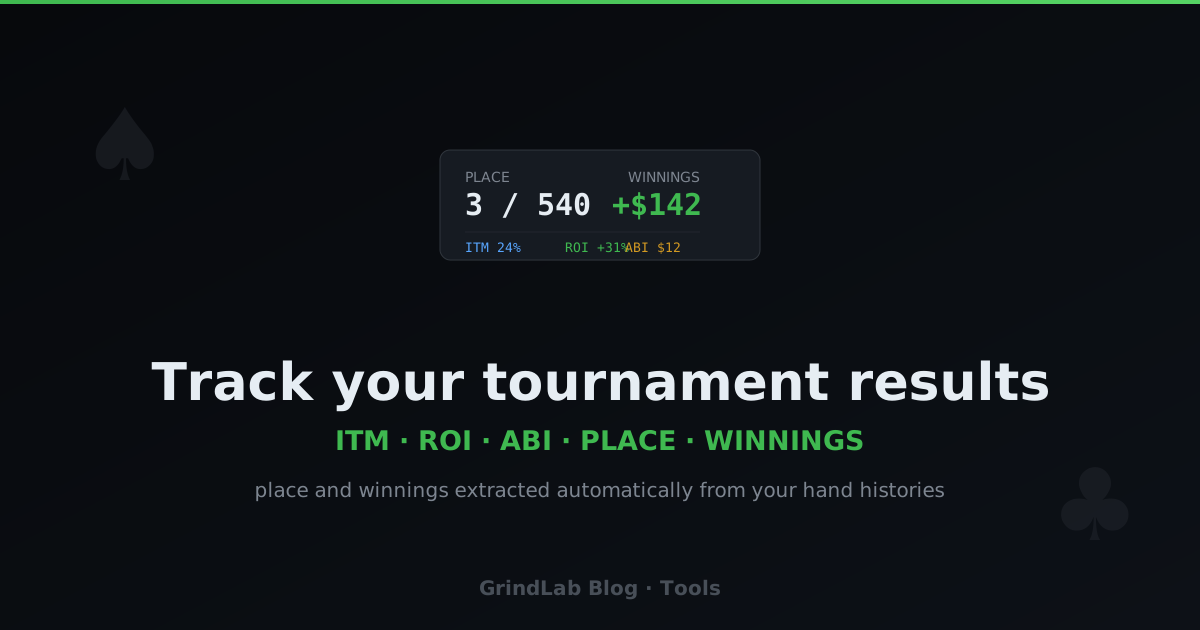
Track your tournament results: ITM, ROI, place and winnings
GrindLab extracts your finishing place and winnings for every tournament you import. Read your real metrics from that history: ITM, ROI and ABI.
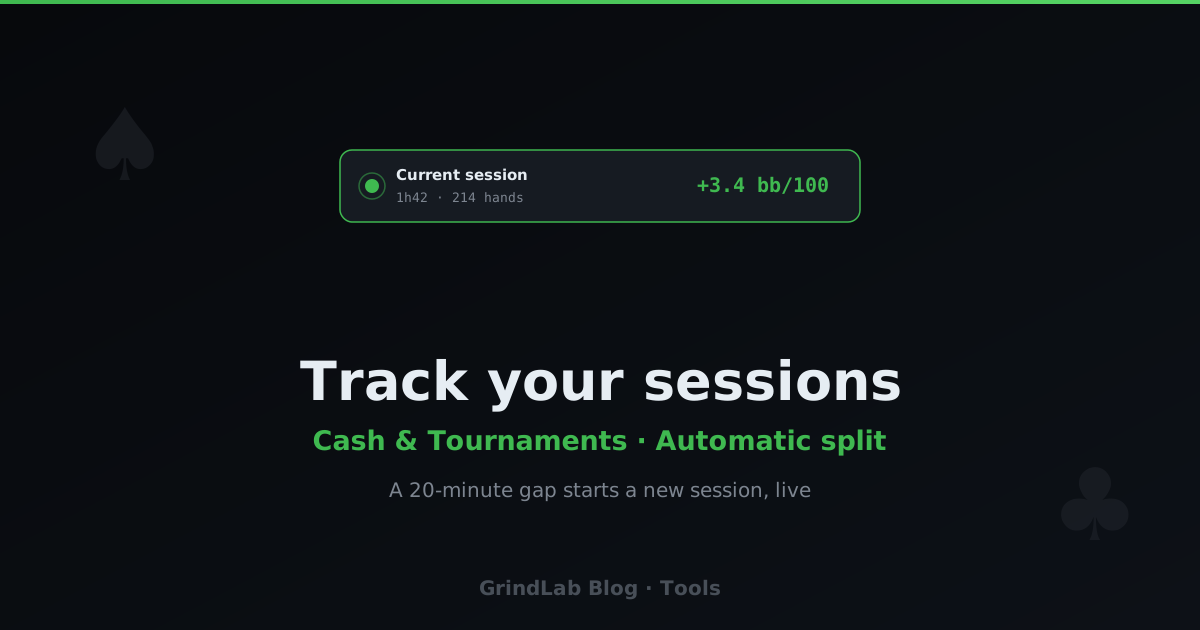
Track your poker sessions automatically (cash and tournaments)
GrindLab groups your imported hands into sessions, splits cash play into episodes and shows the current session live. How to make it a study tool.
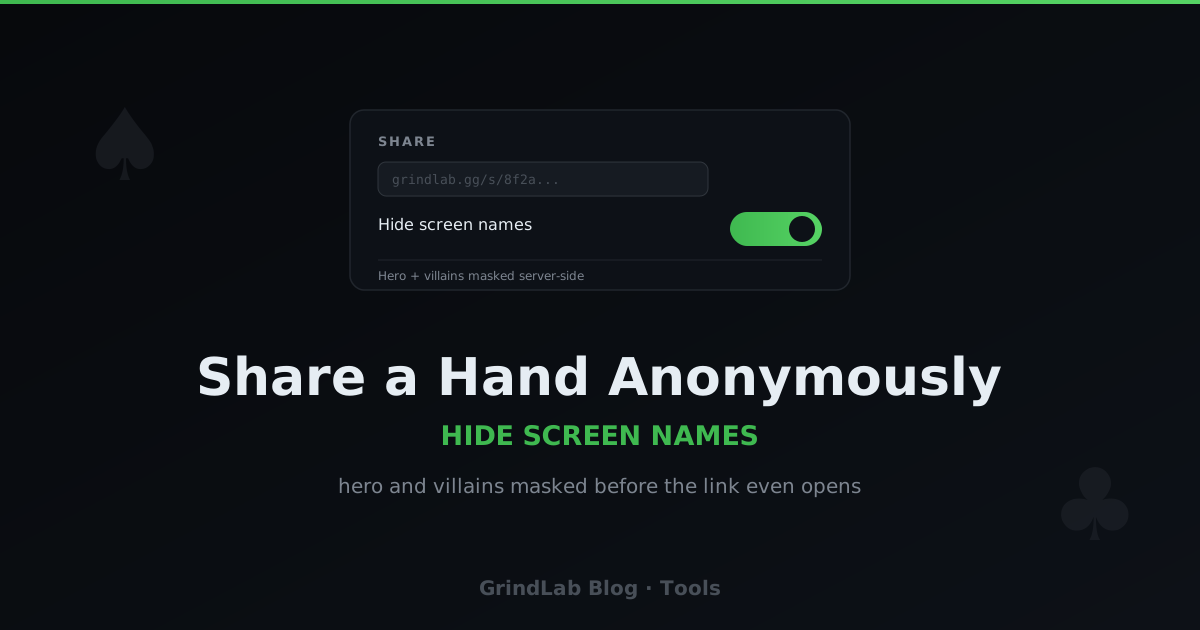
Share a Hand or a Session While Hiding the Screen Names
GrindLab can hide your hero name and every villain screen name when you share a hand, a session or a Lab analysis. Exactly what the toggle masks.
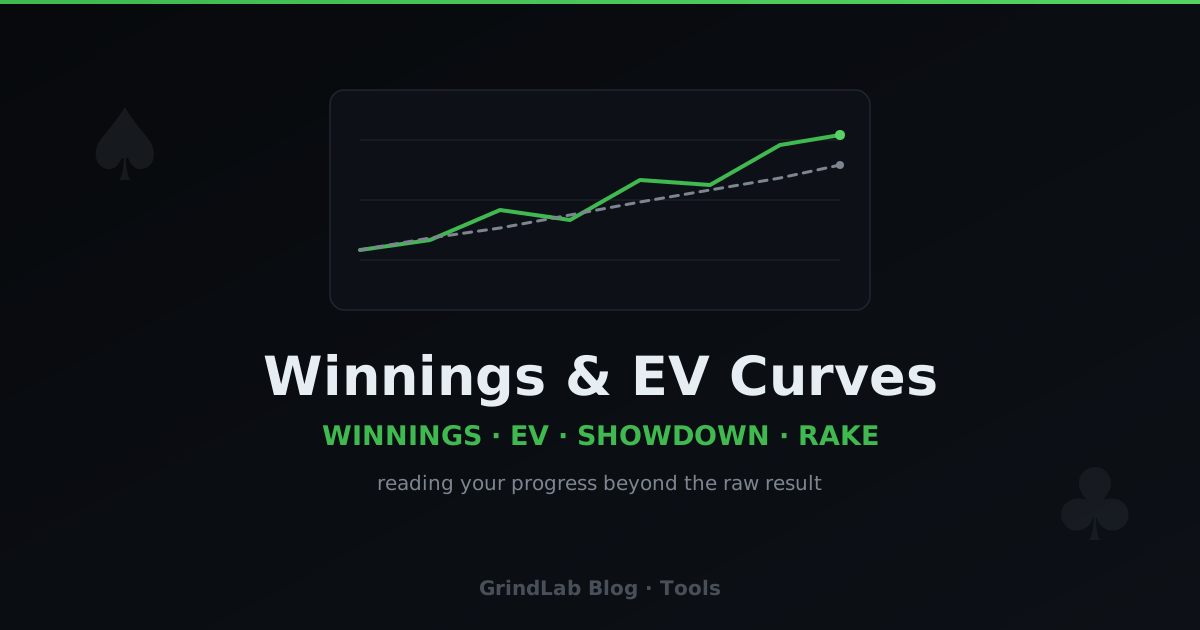
Winnings, EV, showdown and rake curves: reading your progress
GrindLab's Stats page plots 5 curves: winnings, all-in EV, showdown, non-showdown and rake. How to read them and separate variance from your edge.
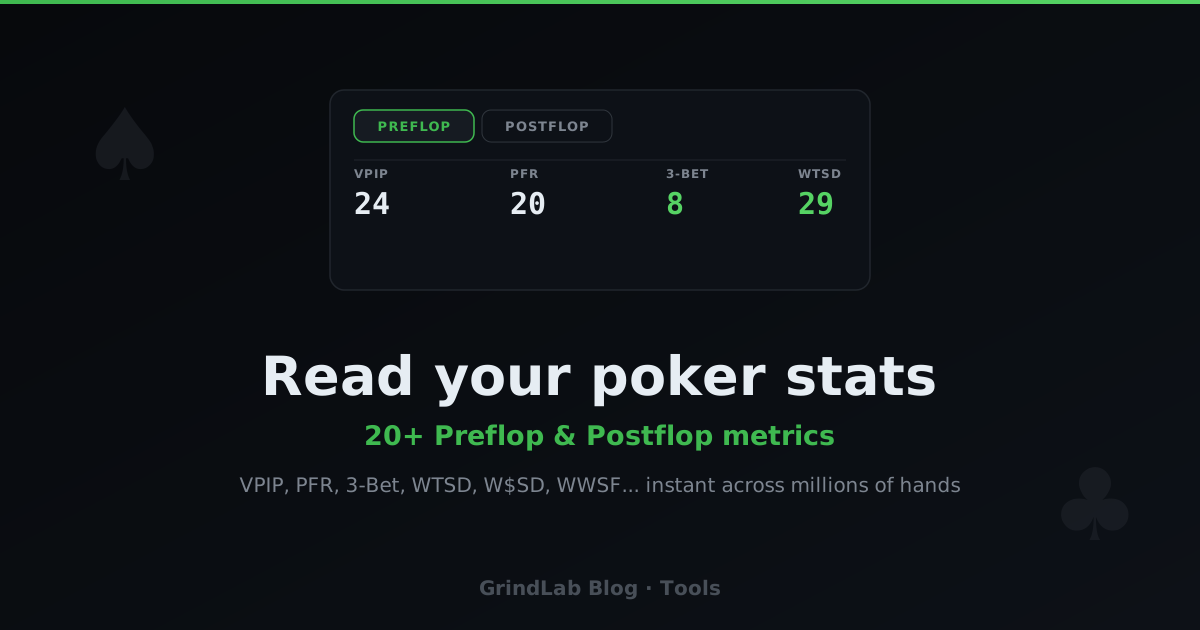
Read your poker stats: 20+ preflop and postflop metrics in GrindLab
GrindLab's Stats page stays instant across millions of hands: 20+ Level-0 stats split into Preflop and Postflop. How to read them and adjust.
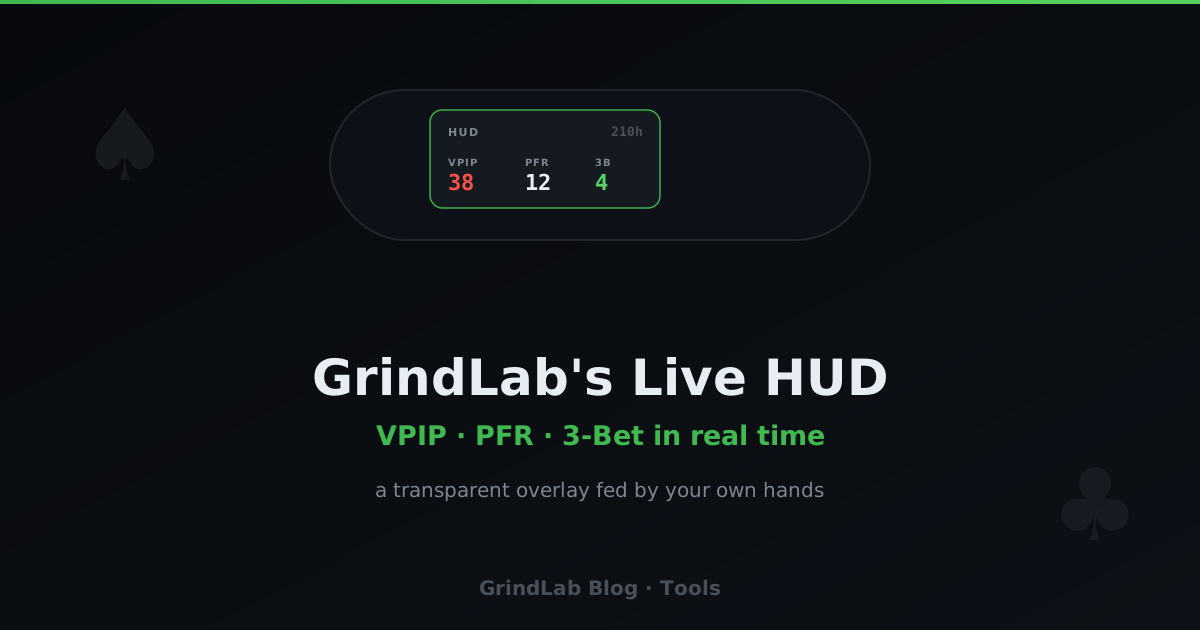
GrindLab's live HUD: VPIP, PFR and 3-Bet on your table in real time
GrindLab Tracker shows a live HUD over your table: VPIP, PFR and 3-Bet for every opponent, computed from your own imported hands. How to read it.
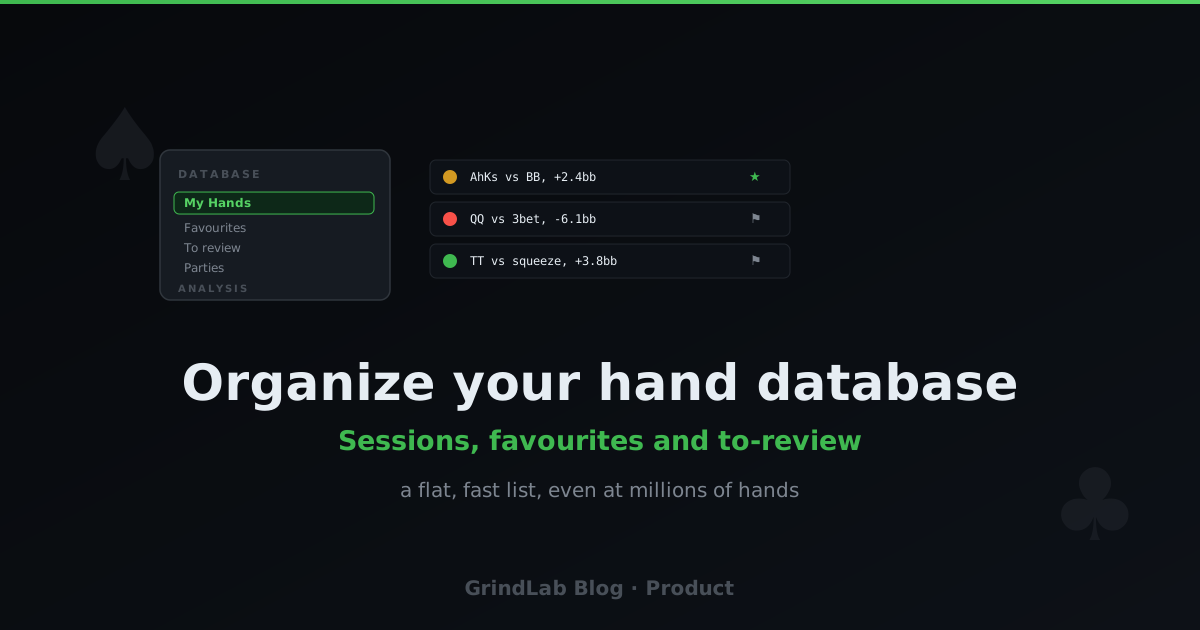
Organize your hand database: sessions, favourites and to-review
GrindLab's Database menu splits My Hands, Parties and Review. Row-level favourite and to-review actions, infinite scroll, same on web and desktop.
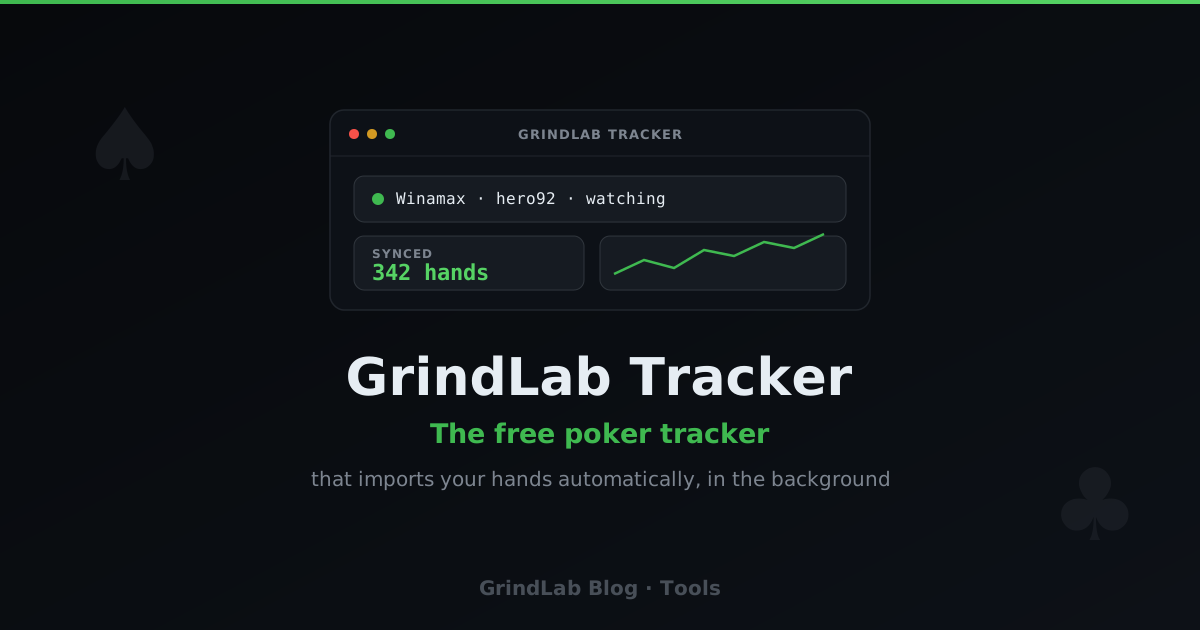
GrindLab Tracker: the free poker tracker that imports your hands automatically
GrindLab Tracker is a free Windows and Mac app that watches your hand history folders, parses locally and syncs to your cloud account. Setup guide.
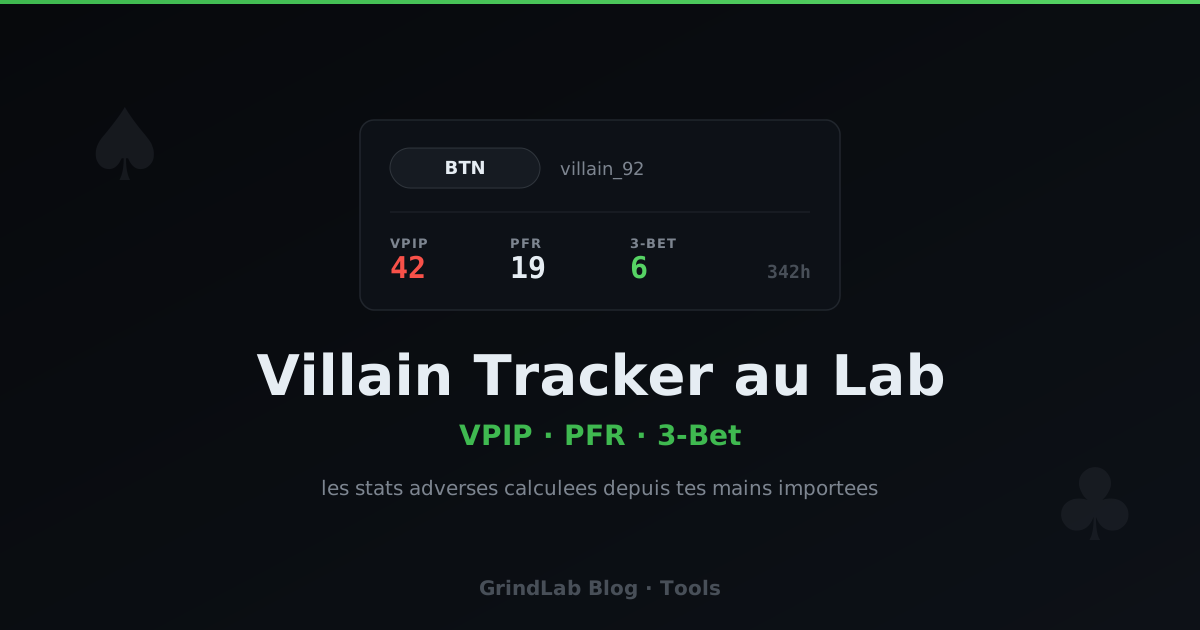
Villain Tracker in the Lab: Reading Opponent VPIP, PFR and 3-Bet
GrindLab shows each villain's VPIP, PFR and 3-Bet next to their seat in the Lab, from your own hands played before the spot. How to read and use it.
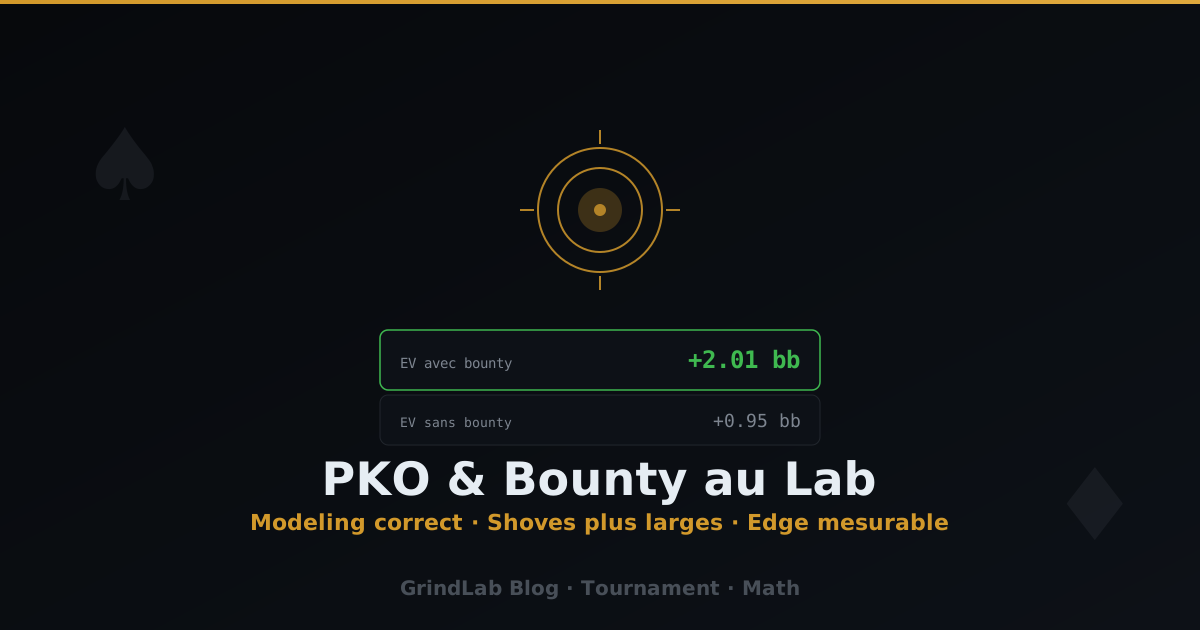
PKO and Bounty in the Lab: Configure, Model, Shove Correctly
Progressive Knockout tournaments change shove EV. GrindLab now models the bounty: how to configure it, read the breakdown and adjust your shoves.
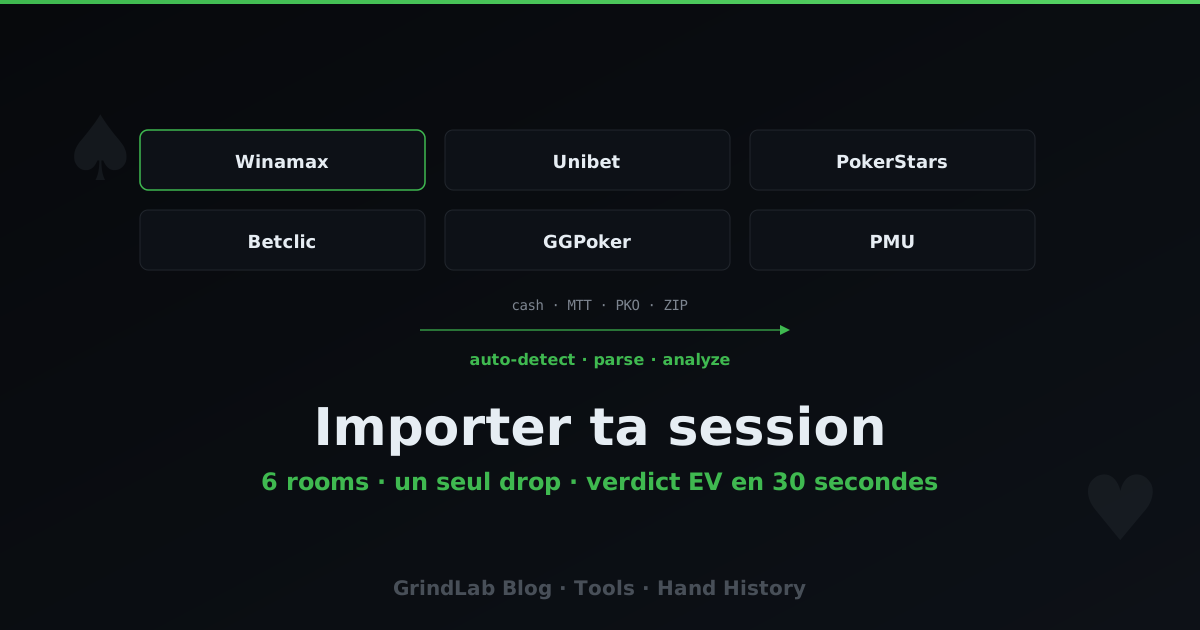
Import Your Session into GrindLab: 6 Rooms, Auto-Detect, Full Workflow
GrindLab imports hand histories from 6 rooms (Winamax, Unibet, PokerStars, Betclic, GGPoker, PMU). The full workflow, from import to EV verdict.
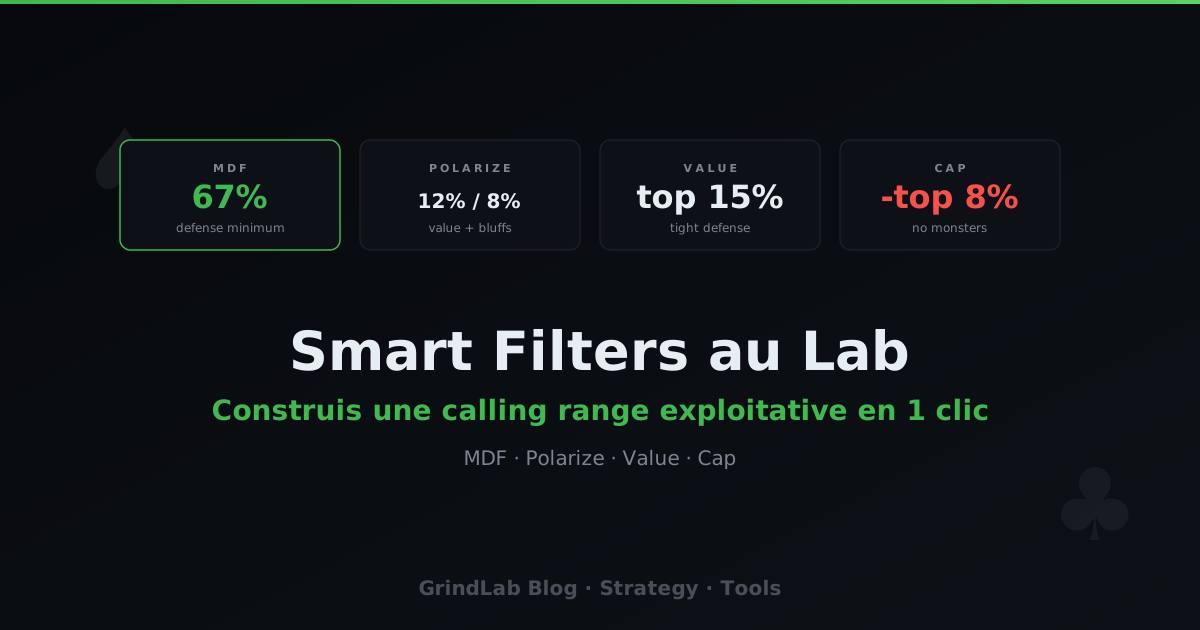
Smart Filters in the Lab: MDF, Polarize, Value, Cap — When to Use Which
GrindLab's Smart Filters build an exploitative calling range in one click: MDF, Polarize, Value and Cap. The math behind each, and when to use it.
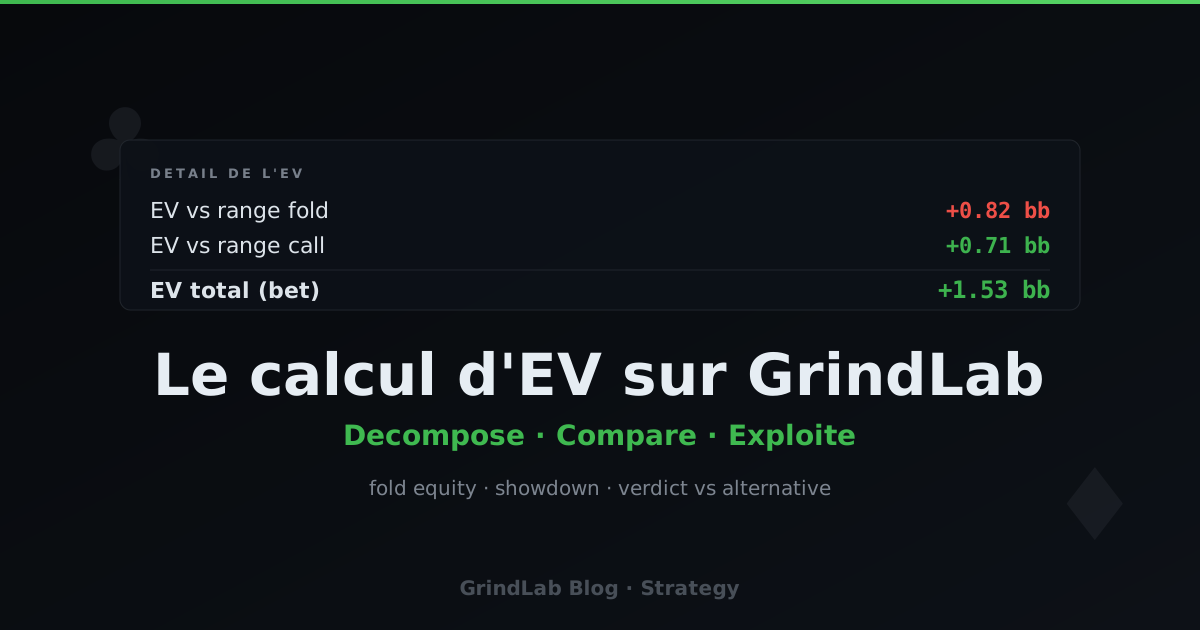
How GrindLab Computes EV: Reading the Breakdown, Comparing Lines, Exploiting Villain
GrindLab splits every Lab verdict into fold and call EV branches. The exact formula, how to read the breakdown, and how to compare bet sizings.
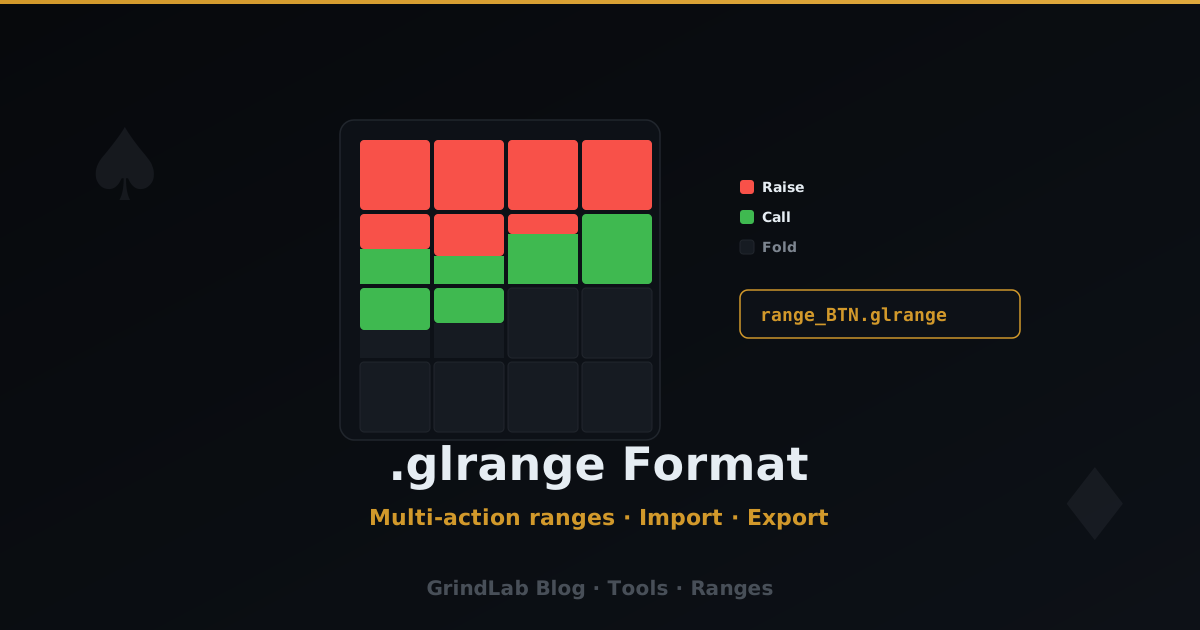
GrindLab .glrange Format: Multi-Action Range Import & Export
GrindLab's .glrange format is the only one that keeps multi-action frequencies per hand. How it compares to Hand2Note, GTO Wizard and Flopzilla.
GrindLab vs Hand2Note: Tracker or Analysis Tool?
Hand2Note is the most powerful poker tracker on the market, GrindLab a study and exploit tool. How they complement each other, and which to pick.
GrindLab vs PokerSnowie: Which AI to Choose for Progress?
PokerSnowie is the historic poker AI. GrindLab is the modern exploit analysis tool. Honest comparison: strengths, weaknesses, and which fits your style.
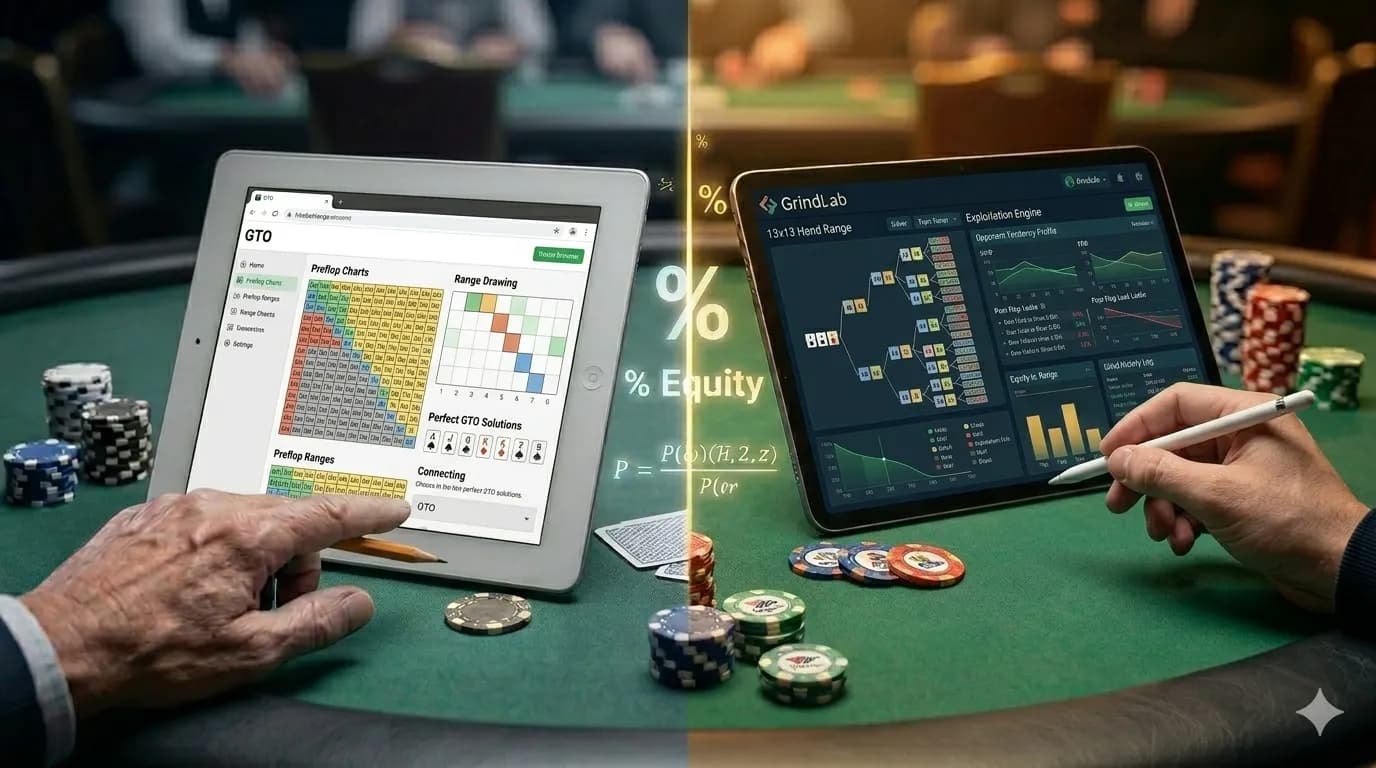
GrindLab vs FreeBetRange: Exploitation Tool vs GTO Preflop Trainer
GrindLab and FreeBetRange both build ranges in the browser, one for exploitation and one for GTO preflop training. Features, pricing, workflows.
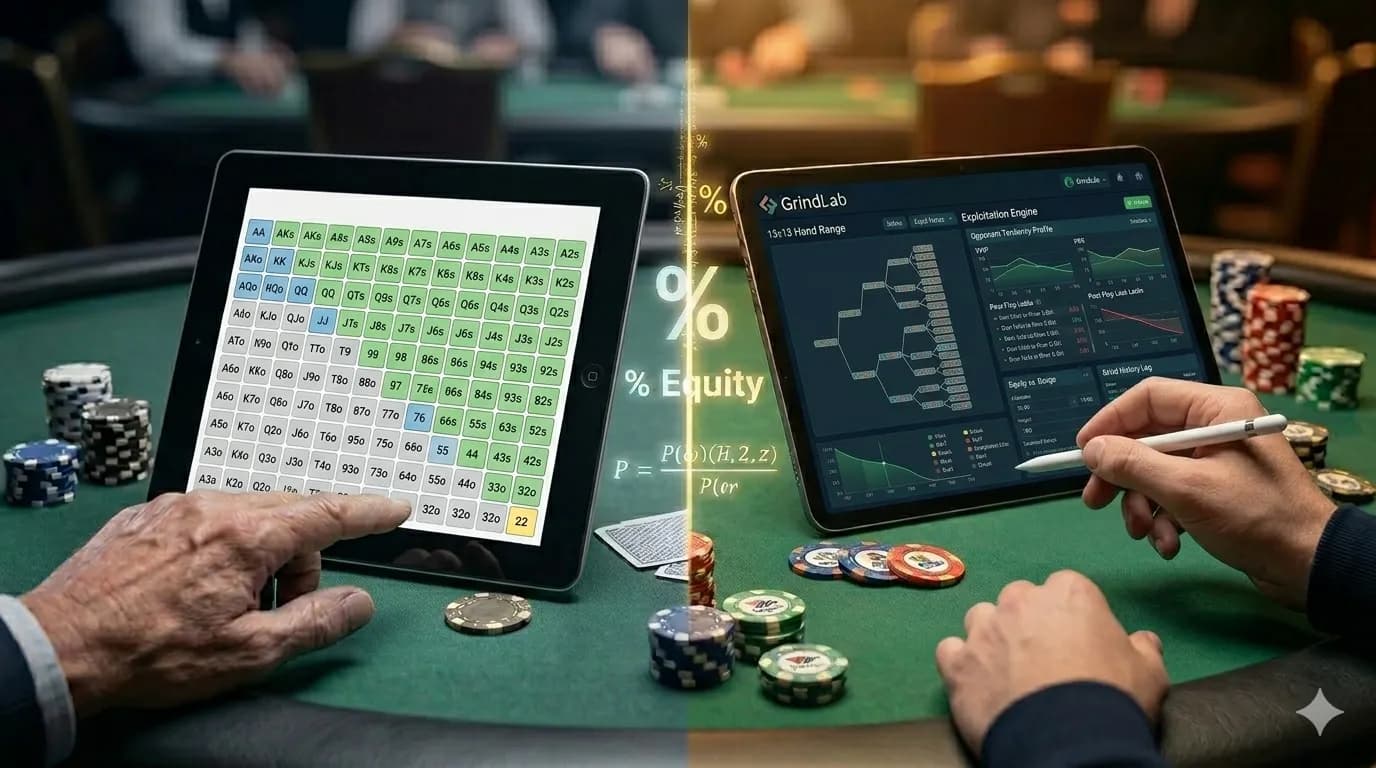
GrindLab vs Range Manager: Which Range Builder Fits Your Game?
GrindLab and Range Manager are two range builders with opposite philosophies: browser-based with equity analysis vs lightweight desktop editor.
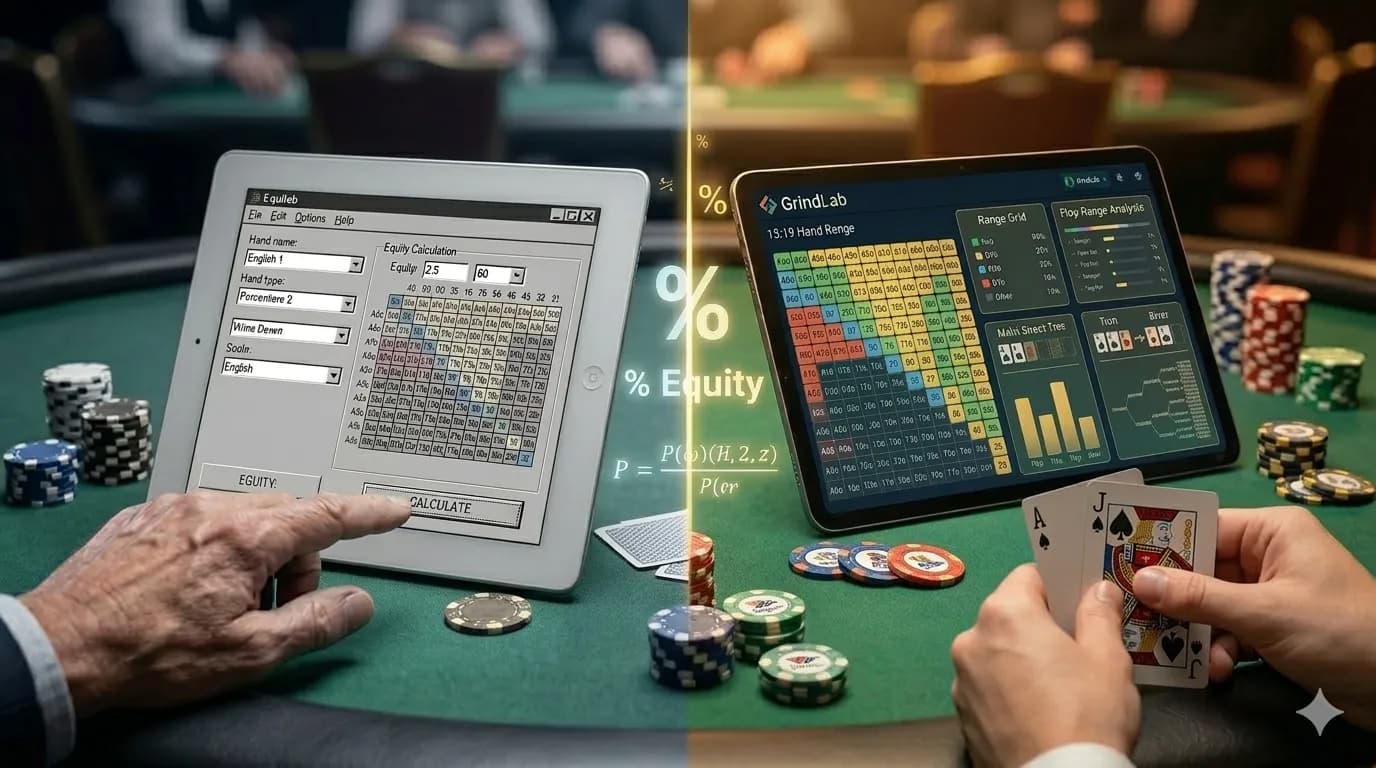
GrindLab vs Equilab: Which Poker Equity Tool Is Right for You?
Equilab is a classic desktop equity calculator, GrindLab a browser-based analysis platform. Compare both and find the right fit for your study.
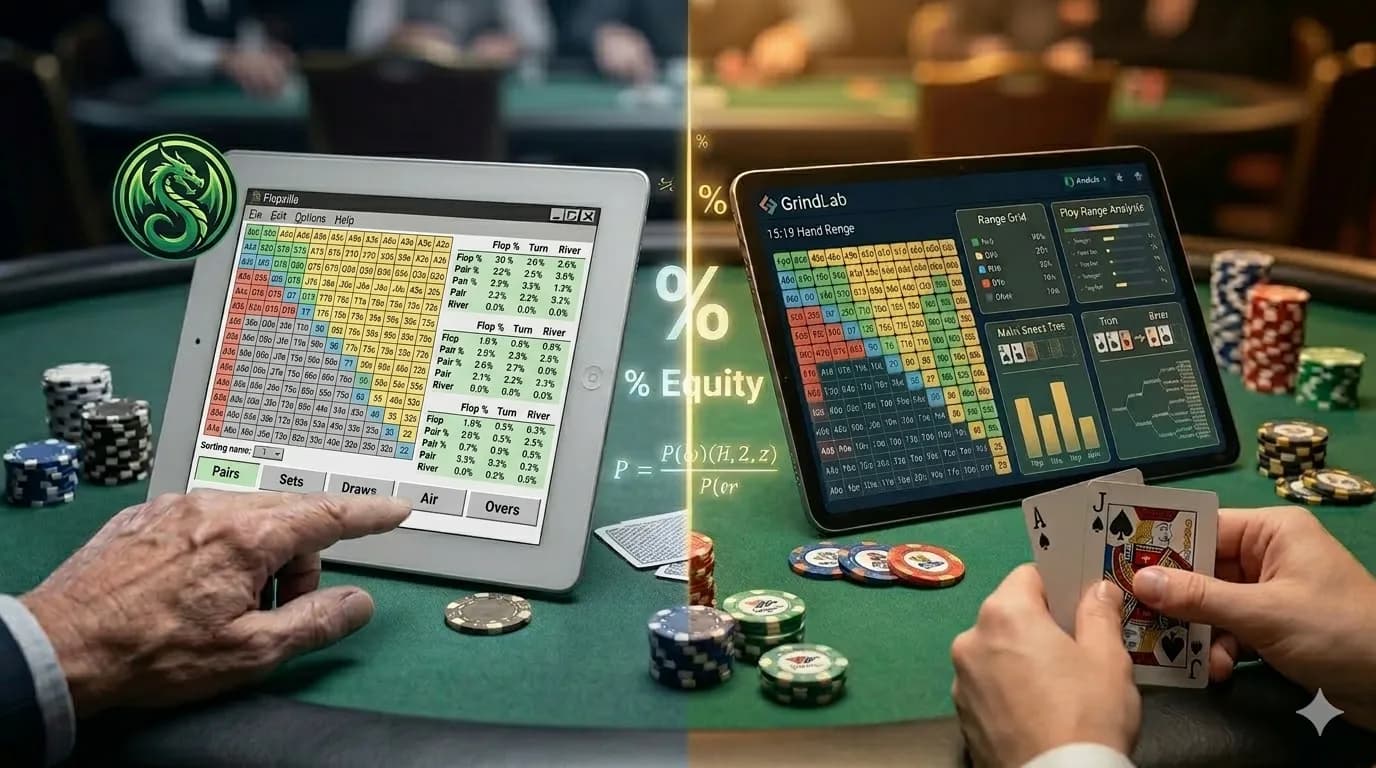
GrindLab vs Flopzilla: Modern Range Analysis Compared
Flopzilla pioneered flop equity analysis. GrindLab takes it further with browser-based multi-street analysis and decision context. How they compare.
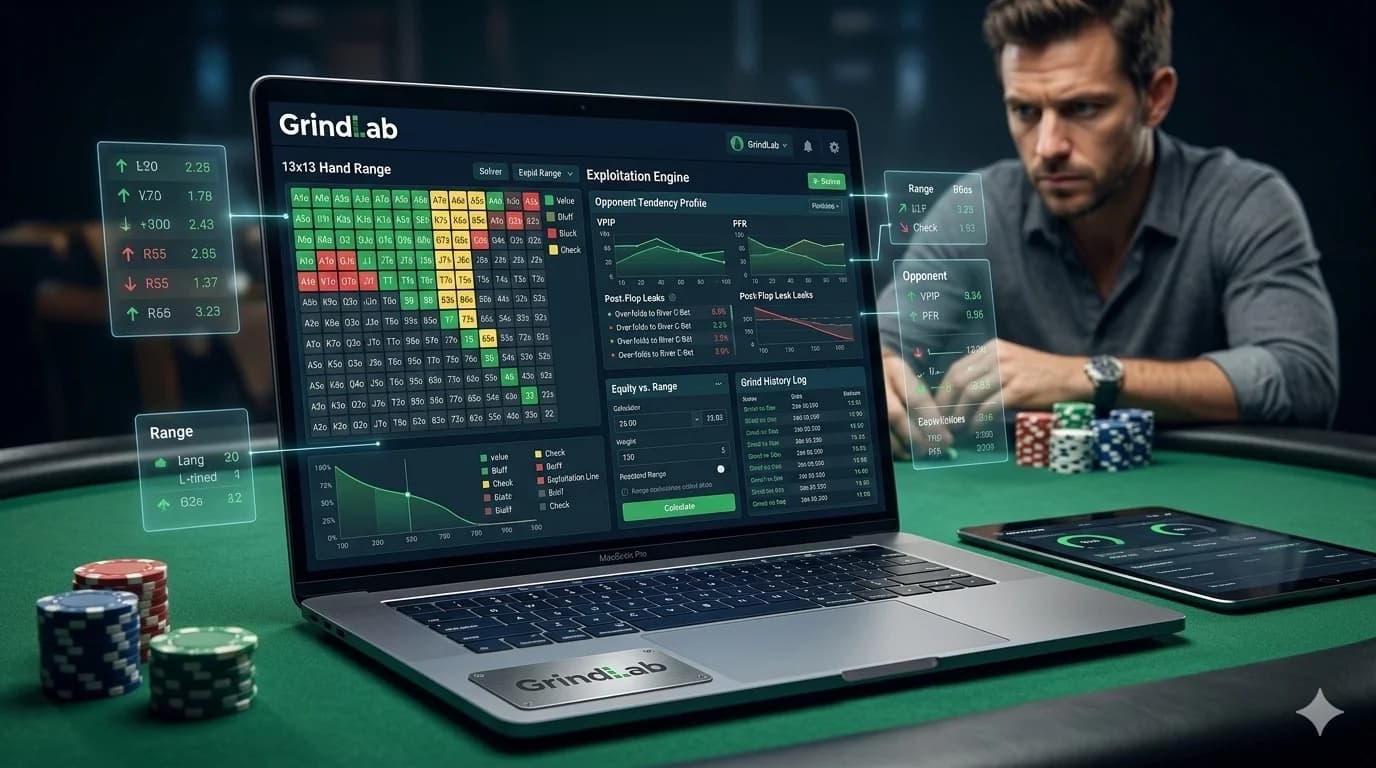
What Is GrindLab? The Poker Exploitation Tool Built for Grinders
Everything about GrindLab, the browser-based poker tool for hand analysis and exploitation: features and comparisons with GTO Wizard and Flopzilla.
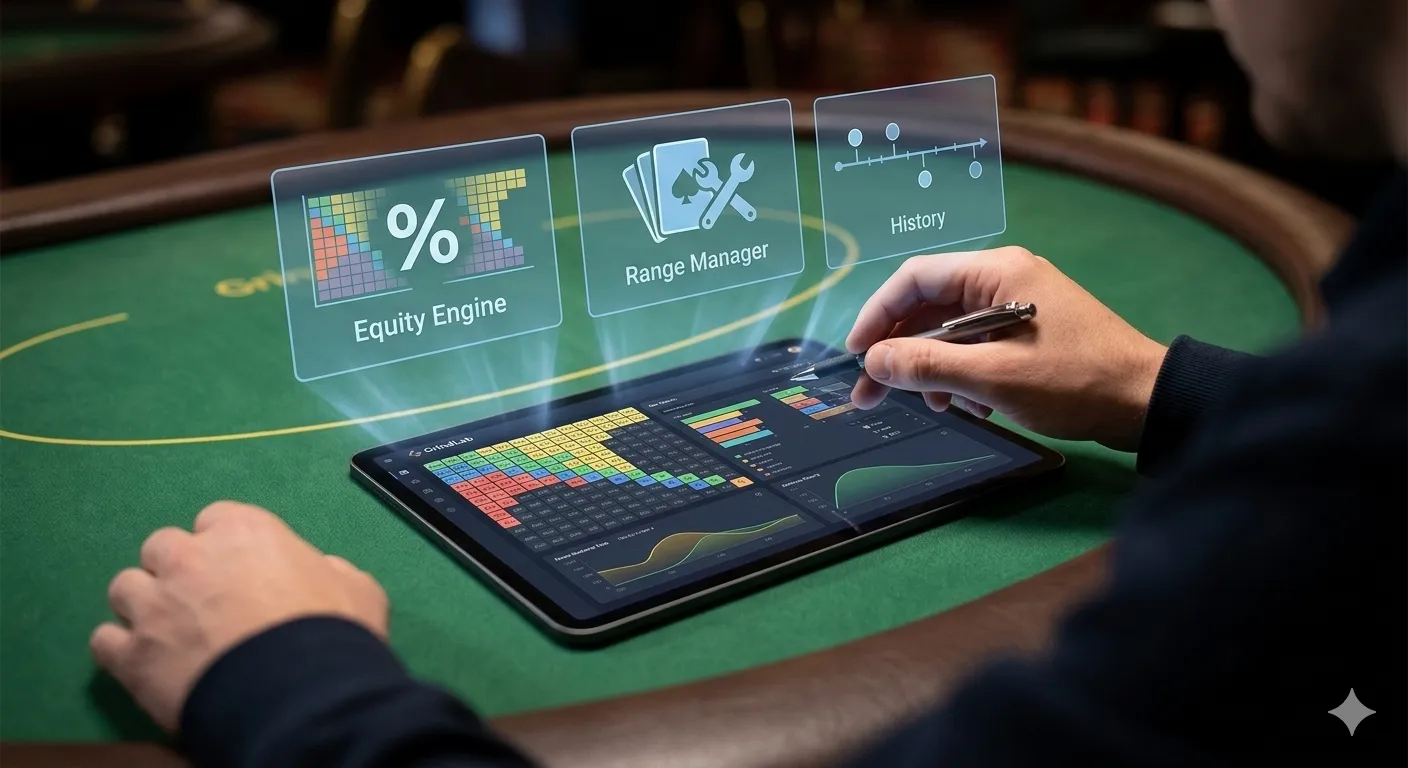
The Complete Guide to GrindLab: How to Use Every Feature
Learn how to use GrindLab's Lab, Ranges, My Hands, and History to exploit your opponents. Step-by-step guide with practical workflows.
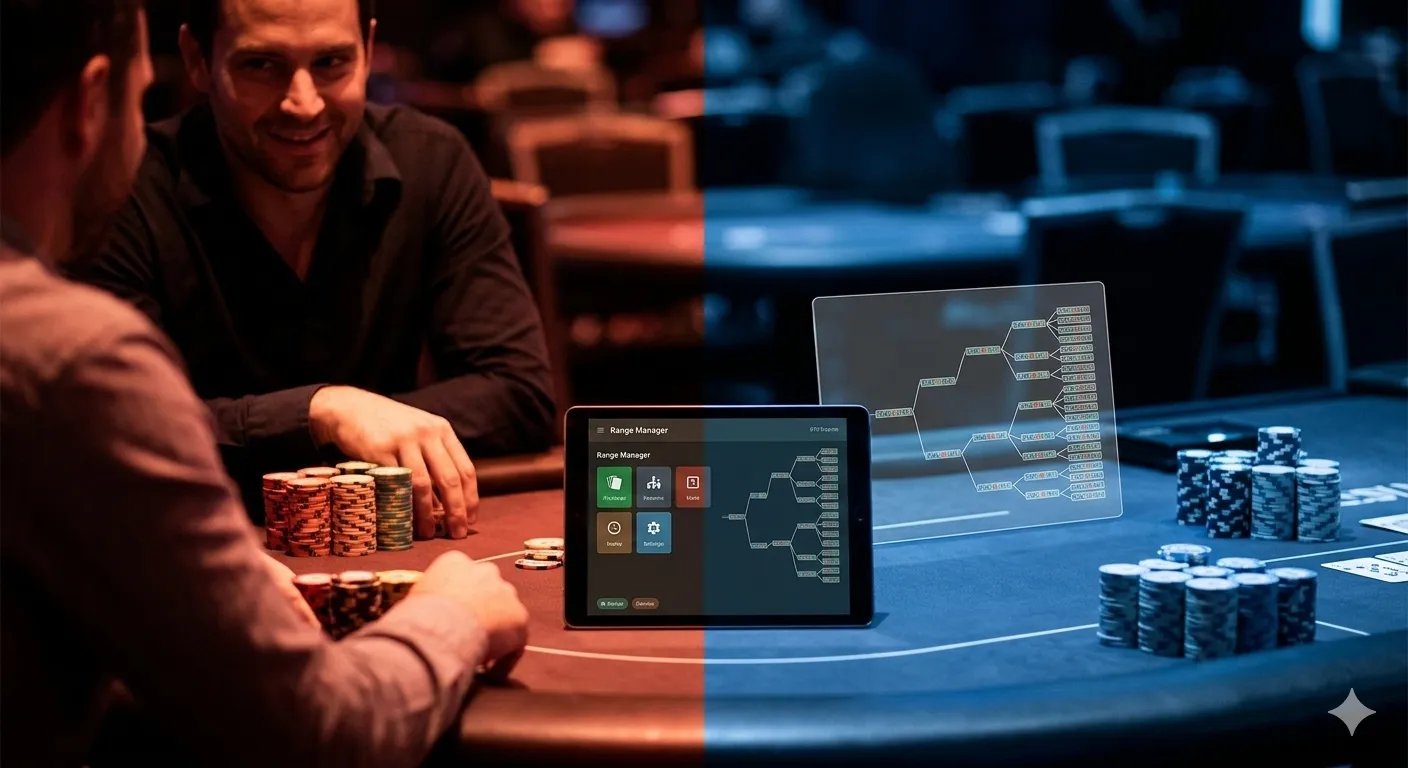
GrindLab vs GTO Wizard: GTO or Exploitation?
GTO Wizard teaches you perfect theory. GrindLab helps you exploit real opponents. Compare both tools and find out which approach fits your game.
Strategy
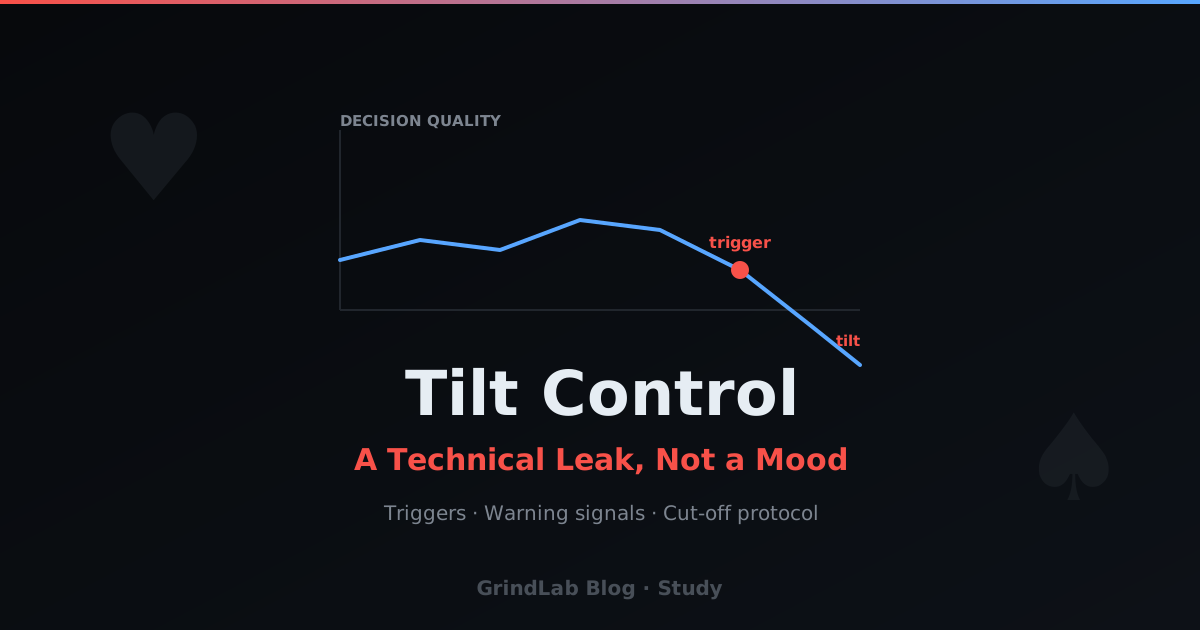
Tilt Control in Poker: Detect It, Cut It, Fix It
Tilt is not a mood, it is a measurable degradation of your decisions. Tilt types, warning signals, a cut-off protocol and the underlying work that reduces it.
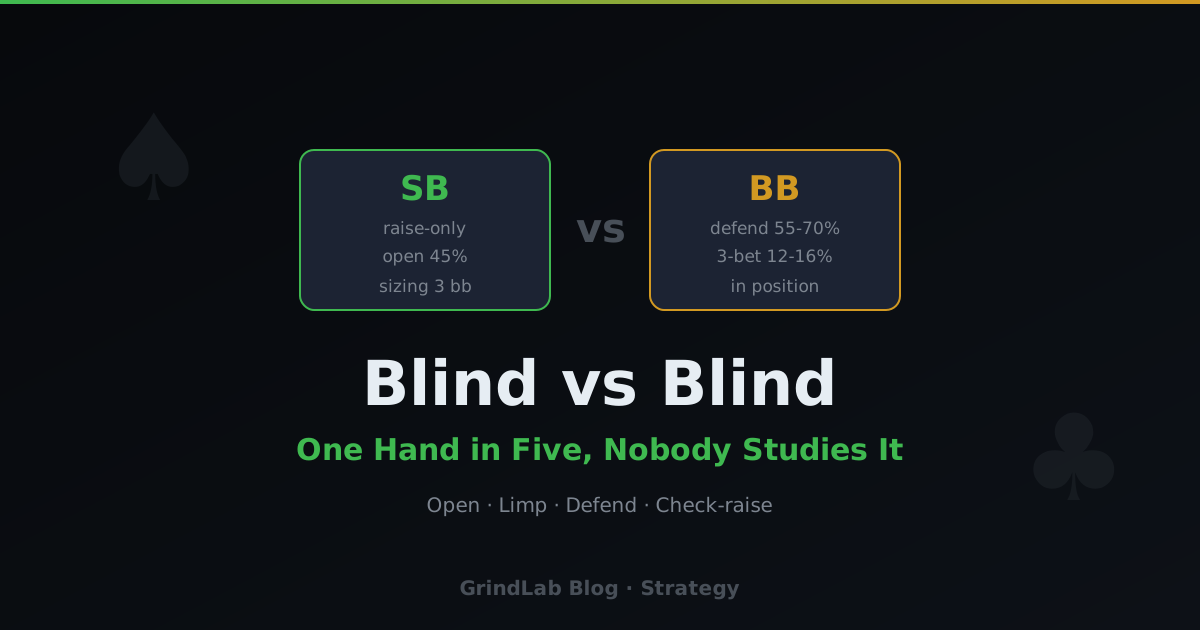
Blind vs Blind Poker: Playing the Small Blind and the Big Blind
Open, limp or fold from the SB, defend and 3-bet from the BB, then play postflop out of position: the complete guide to poker's most misplayed spot.
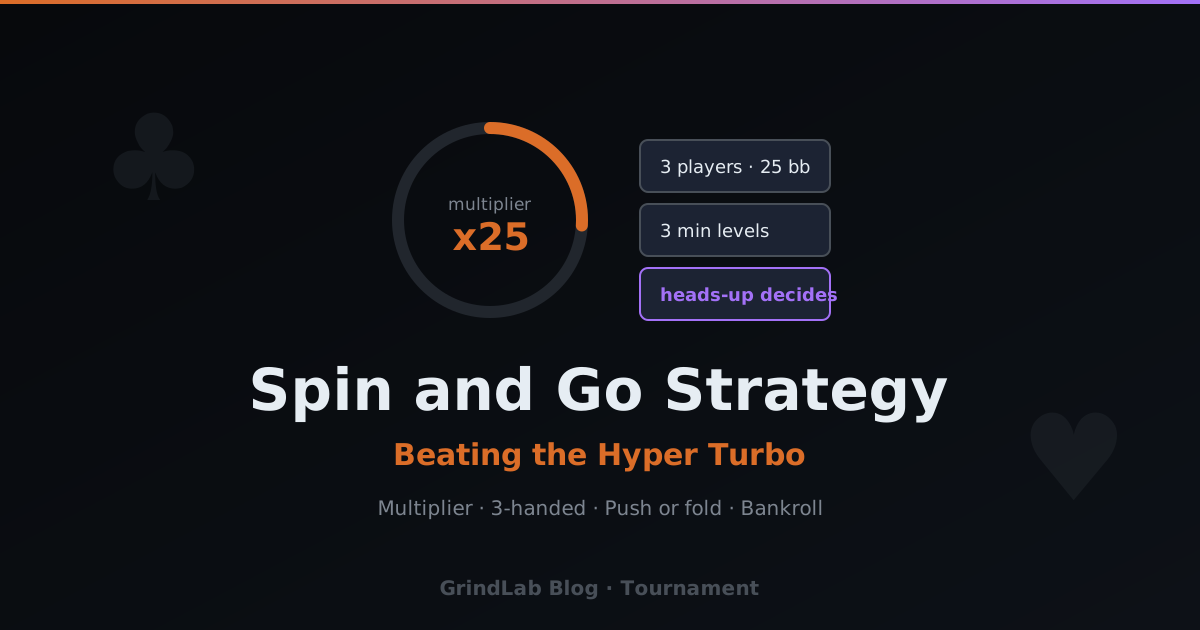
Spin and Go Strategy: The Complete Hyper Turbo Guide
Three-handed ranges, the heads-up transition, push or fold and the multiplier effect: the full method for beating Spin and Go games.
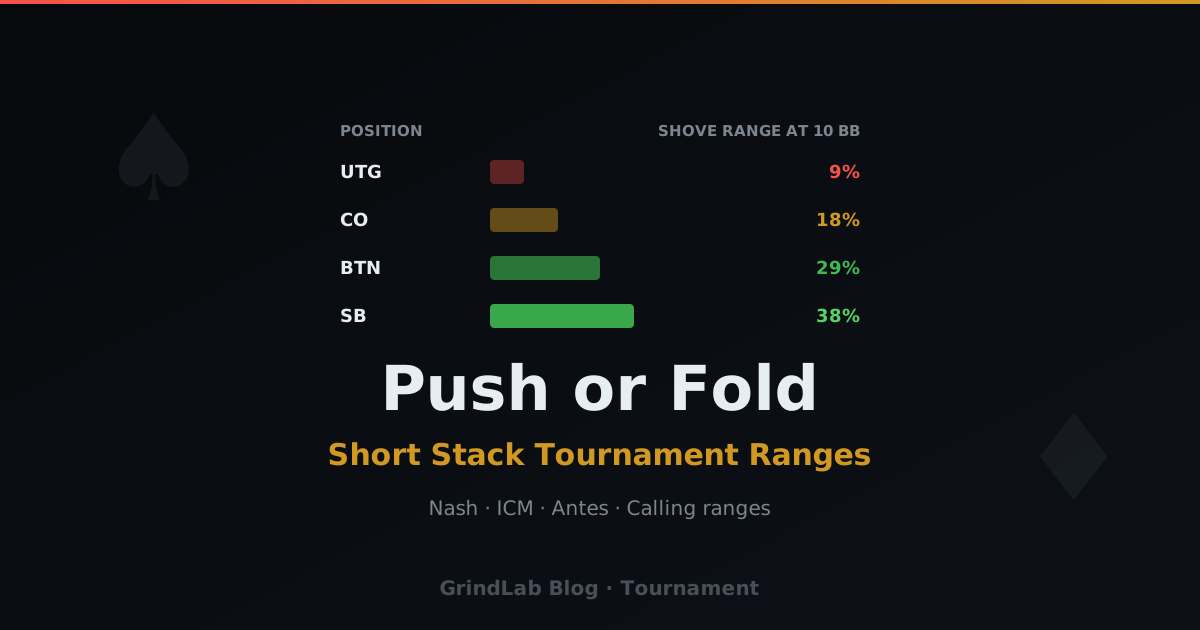
Push or Fold Poker: Short Stack Ranges in Tournaments
Under 15 big blinds the game shrinks to two options. Shove ranges by position, calling ranges, ICM adjustments and antes: the complete push or fold guide.
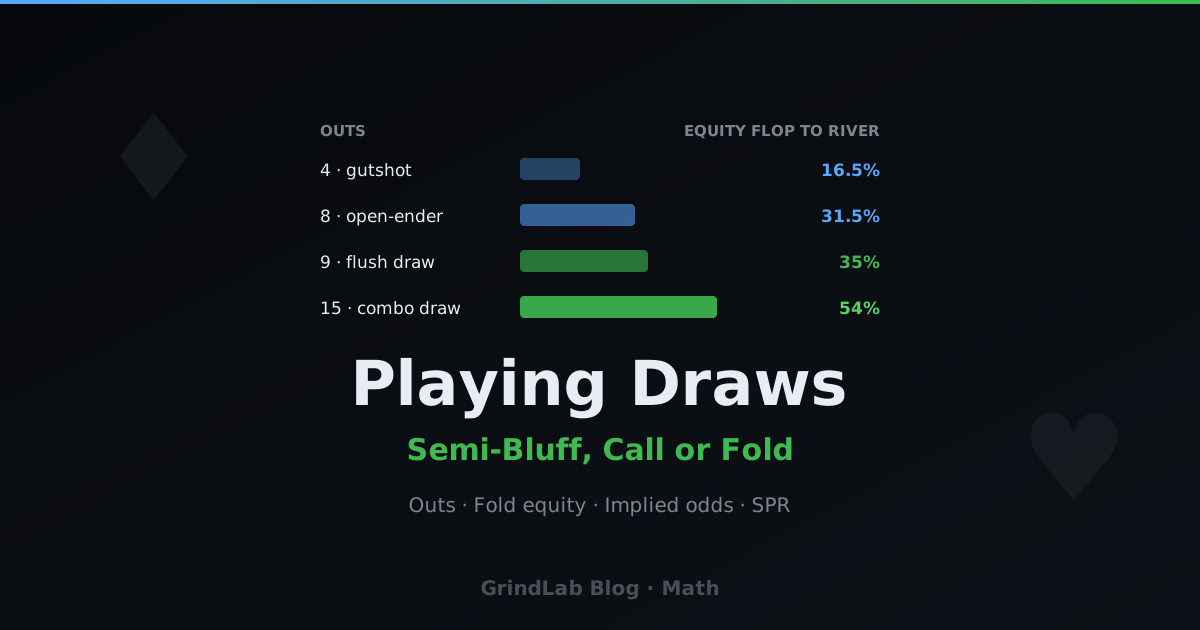
Playing Draws in Poker: Semi-Bluff, Call or Fold
Flush draws, open-enders, gutshots, combo draws: how to choose between semi-bluffing and calling, with the equity and fold-equity thresholds that decide it.
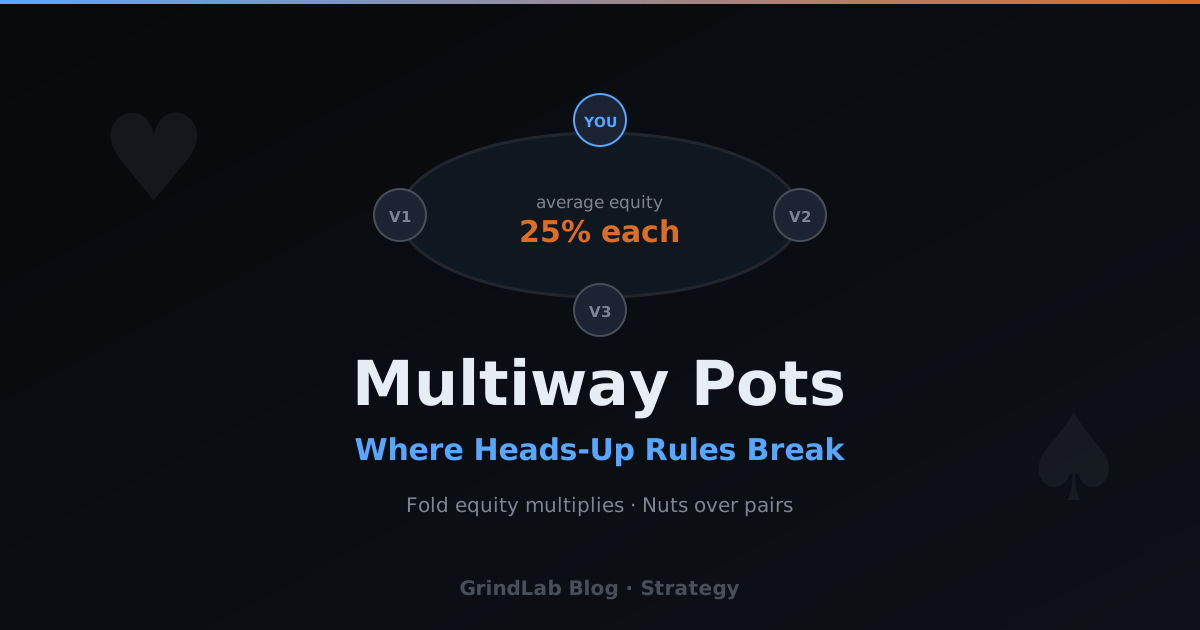
Multiway Pots in Poker: Playing Three-Handed and Beyond
Multiway flips half the heads-up rules. C-bet frequencies, hand selection, sizing and defence: the complete guide to pots with three players or more.
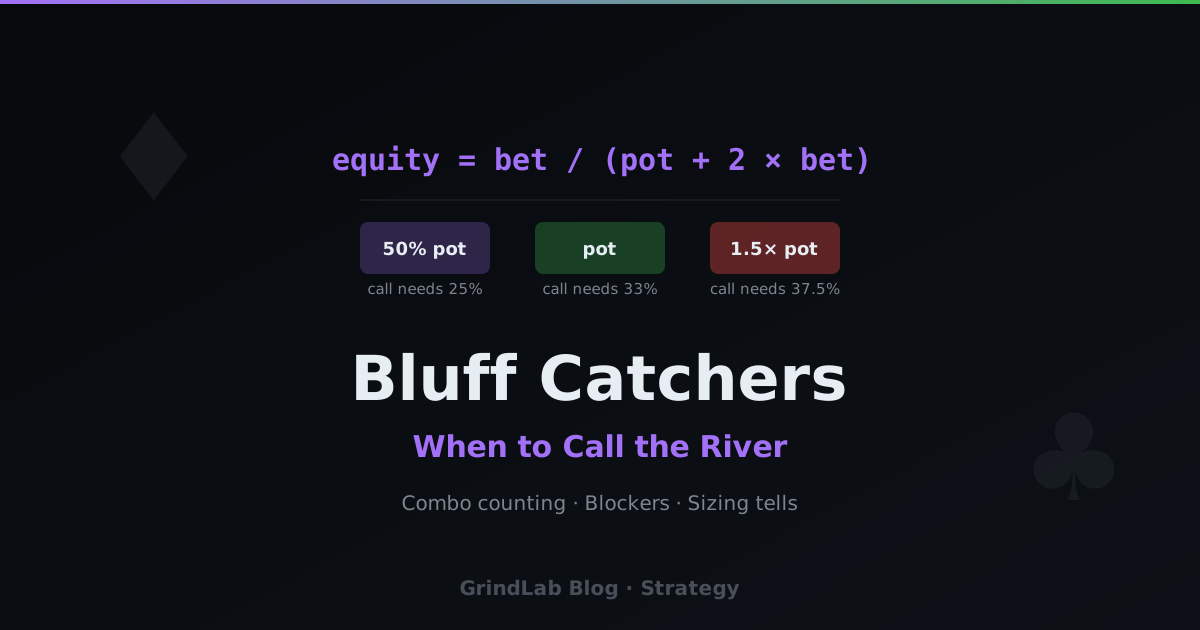
Bluff Catchers in Poker: When to Call and When to Let It Go
Count bluff combos, apply river pot odds, pick the right blocker: the complete method for deciding whether your middle pair calls or folds.
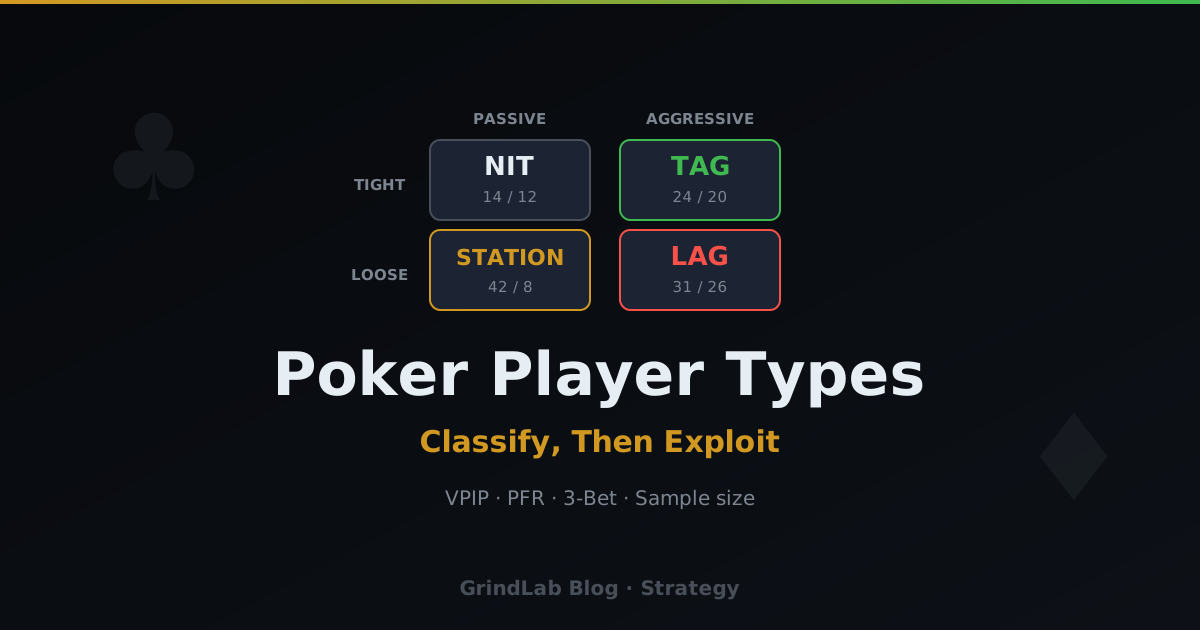
Poker Player Types: TAG, LAG, Nit, Fish and How to Exploit Each One
Identify any opponent in 30 hands with VPIP, PFR and AF, then apply the adjustment that prints. Player archetypes and their counter-strategies.
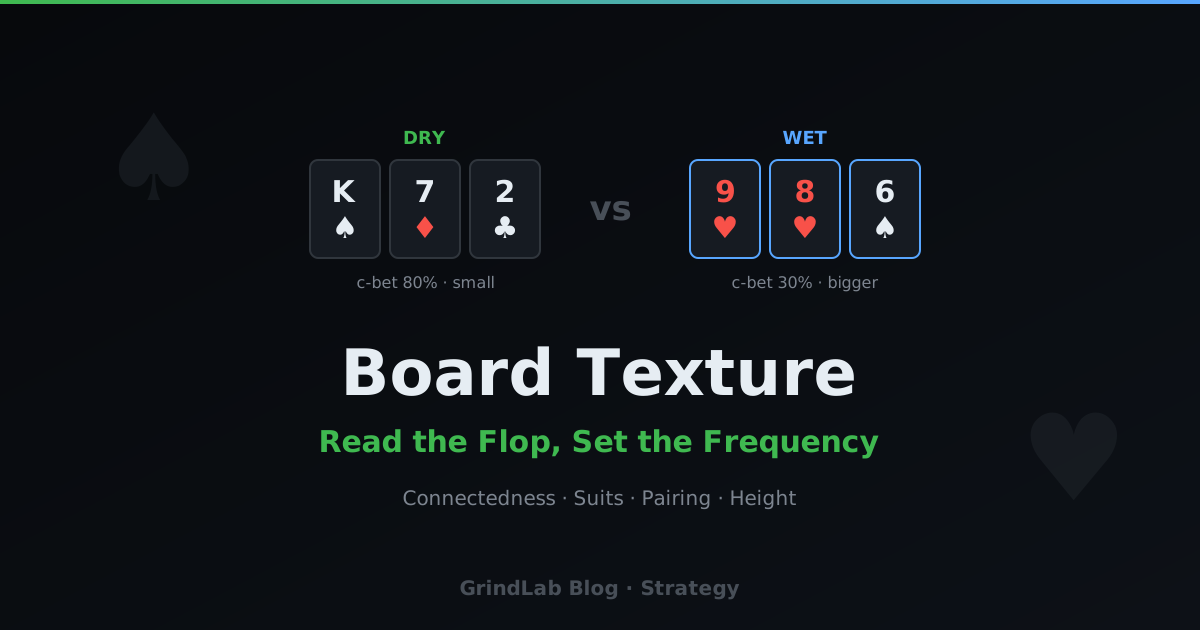
Board Texture in Poker: Read the Flop, Adjust Your Strategy
Dry, wet, monotone, paired: learn to classify any flop texture in three seconds and turn it into a c-bet frequency, a sizing and a defence plan.
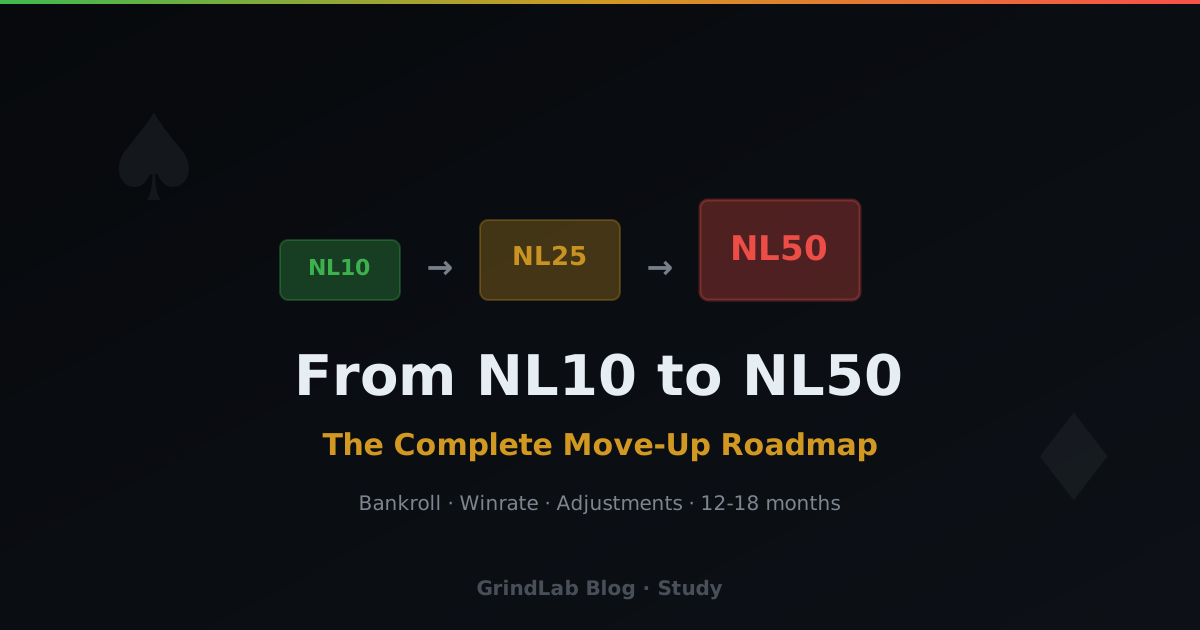
How to Move Up from NL10 to NL50 in Poker: Complete Roadmap
The NL10 to NL50 jump multiplies stakes by 5. Discover the concrete roadmap: target winrate, bankroll, game adjustments, and mistakes to avoid.
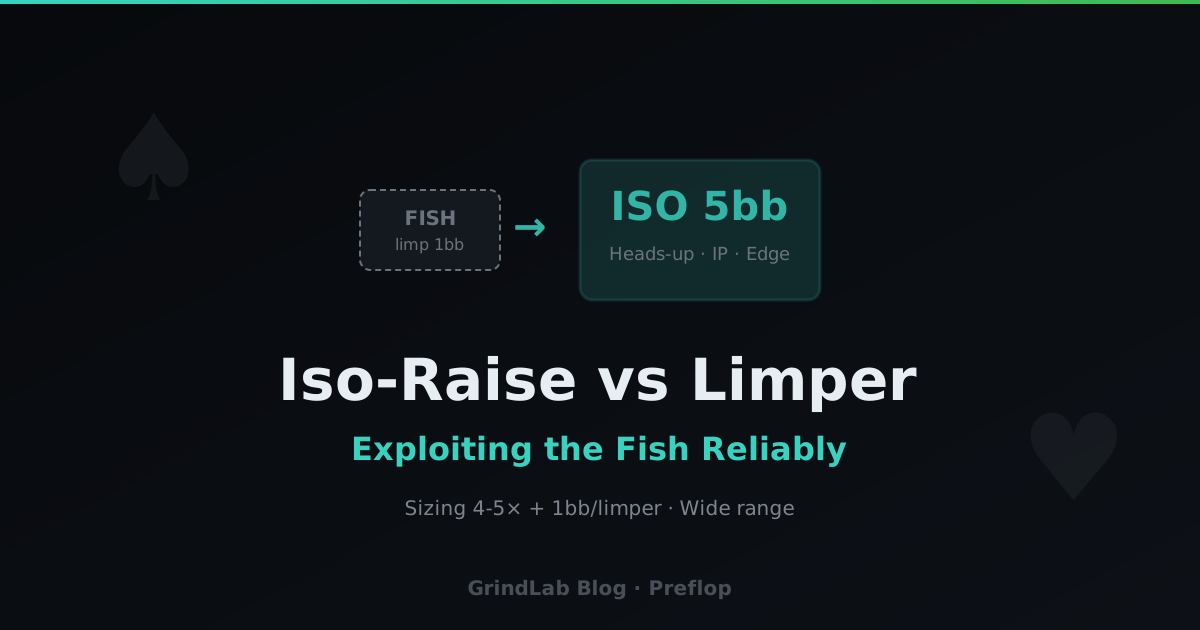
Iso-Raise vs Limper in Poker: Complete Strategy
When a fish open-limps, the iso-raise is the profitable weapon. Learn the sizing, range, and how to isolate the limper heads-up to exploit their passivity.
Defending the Big Blind in Poker: Complete Guide
BB is poker's most losing position — but well defended, the loss is capped at 5 BB/100. Learn defense ranges by position, sizings, and the art of OOP play.
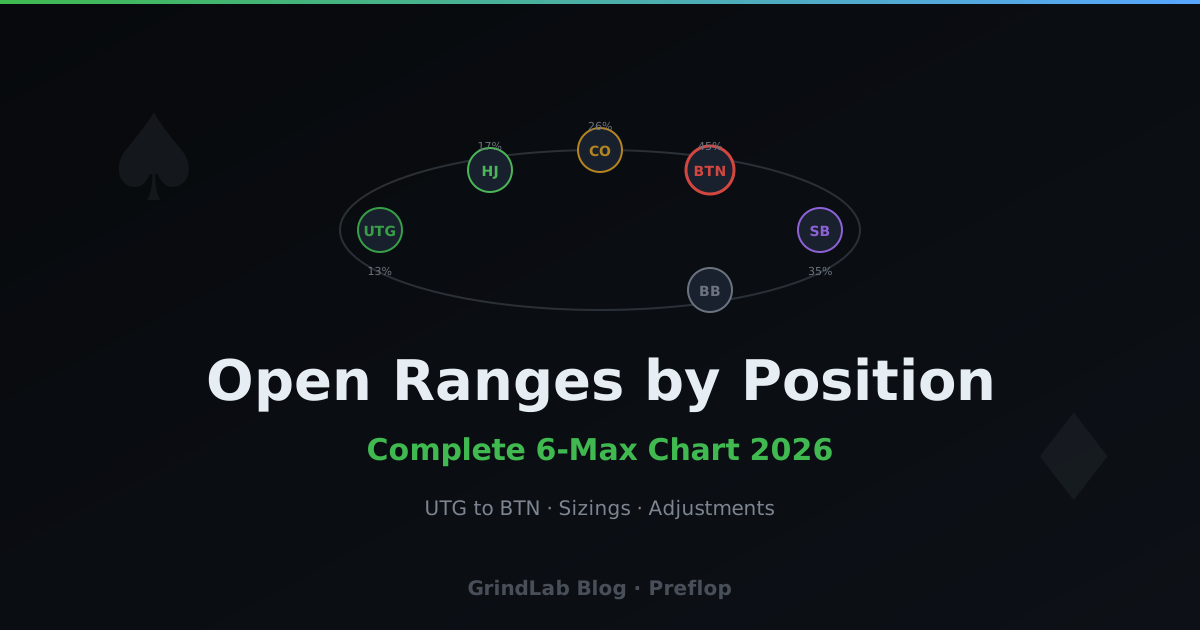
Poker Open Ranges: Complete Position-by-Position Chart 2026
Open ranges by position are the foundation of every winning player. UTG, MP, CO, BTN, SB: discover the percentages and exact hands to open in 6-max cash.
Poker Variance: Understand, Measure, Manage
Variance is what makes poker mentally brutal. Learn to measure statistically expected downswings, separate skill from luck, and survive psychologically.
Poker Winrate in BB/100: Measuring Your True Performance
BB/100 winrate is modern poker's reference metric. Learn to calculate it, interpret by stake, and know when your sample is sufficient to draw conclusions.
Poker Bankroll Management: The 2026 Guide by Format
How many buy-ins for cash, MTT, Spin & Go? How to manage your bankroll, move up stakes, and survive variance. The complete modern bankroll management guide.
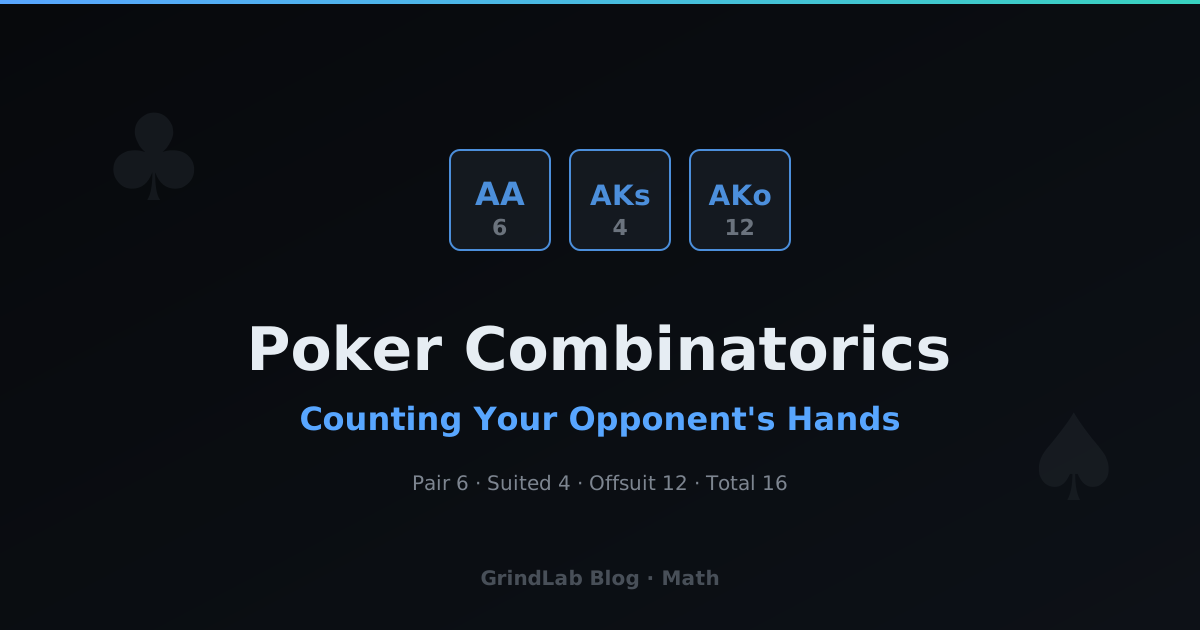
Poker Combinatorics: Counting Your Opponent's Hands
Combinatorics is modern poker's hidden weapon. Learn to count combos, adjust with blockers, and calibrate decisions on villain's actual range composition.
Triple Barrel Bluff in Poker: The Art of 3-Street Bluffing
Bluffing flop, turn and river demands rigorous selection. Which hands to triple barrel, which run-outs work, and why most triple barrels are errors.
Donk Bet in Poker: Why and When to Bet Out of Position
The donk bet is one of poker's worst-played lines. Learn when it is correct, on which boards, and why solvers brought this once-taboo bet back.
4-Bet in Poker: Complete Strategy and Preflop Range
The 4-bet is the ultimate preflop weapon against 3-bettors. Learn when to 4-bet for value, when to 4-bet bluff, what sizing, and how to respond to a 5-bet jam.
Squeeze Play in Poker: The Multi-Way 3-Bet Explained
The squeeze play exploits the opener AND the callers in one move. When to squeeze, what sizing and what range turn an ordinary spot into a win.
Overbet in Poker: When to Bet Larger Than the Pot
The overbet is the most powerful sizing in modern poker. When to overbet, on which boards, with what range, and how to build the betting tree.
Check-Raise in Poker: When and How to Use It
Master the check-raise in poker: OOP defense, semi-bluff, value. Learn when to check-raise to exploit your opponents.
3-Bet in Poker: When, Why, and What Range
Master the 3-bet in poker: value range, bluff range, sizing by position. How to build a 3-bet range that generates profit.
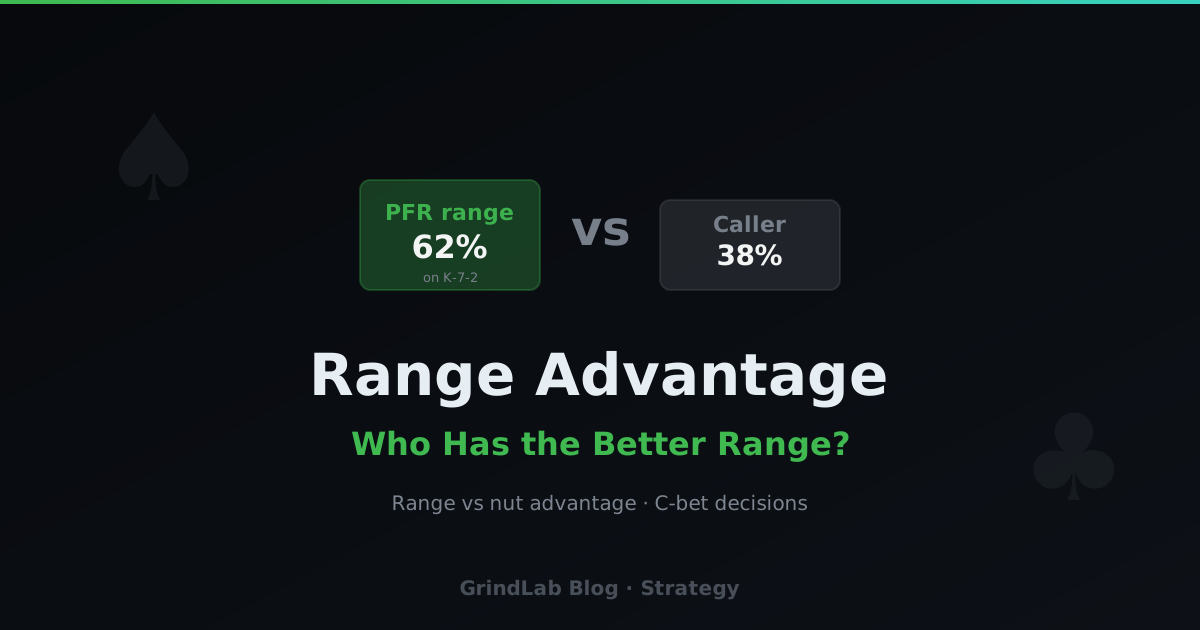
Range Advantage in Poker: How to Identify and Exploit It
Understand range advantage in poker: how to identify which range dominates a board, and how to exploit that advantage with your bets.
C-Bet in Tournaments: Strategy, Frequency, and MTT Sizing
Master the c-bet in poker tournaments: when to c-bet, what sizing, how ICM and short stacks change everything. Complete MTT guide.
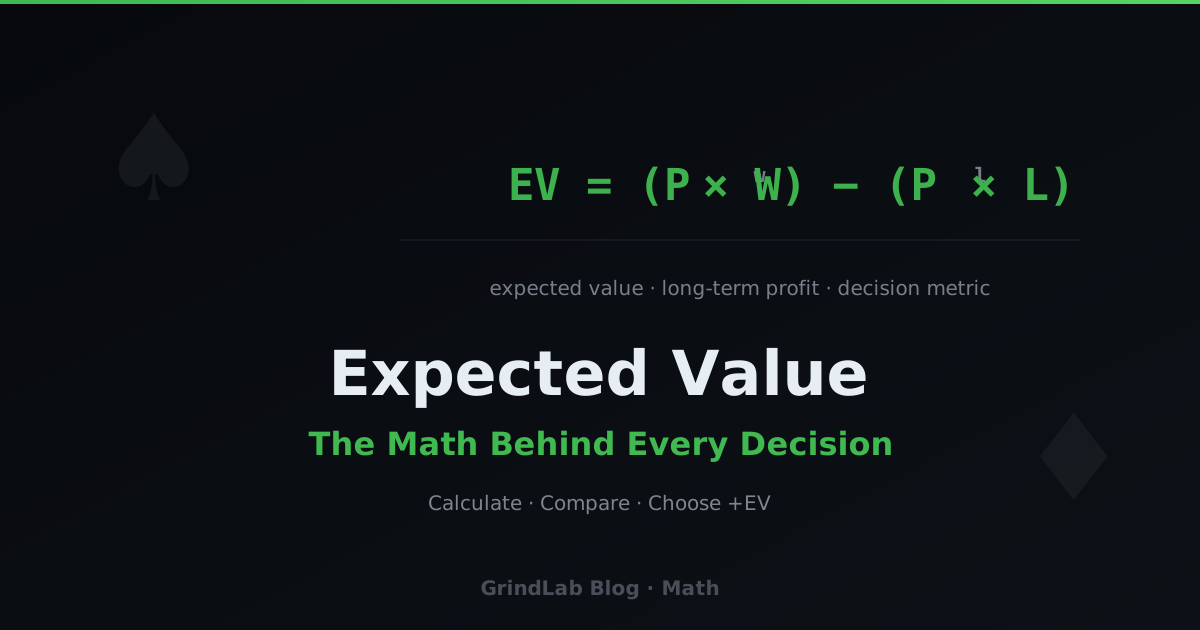
Expected Value in Poker: Calculating the EV of Every Decision
Expected Value explained simply: the formula, how to calculate the EV of a call, bluff, or fold, and why it's poker's ultimate metric.
Fold Equity in Poker: Formula, Calculation, Application
Understand poker fold equity: the formula, how to calculate if a bluff is profitable, and how to exploit the opponent's tendency to fold.
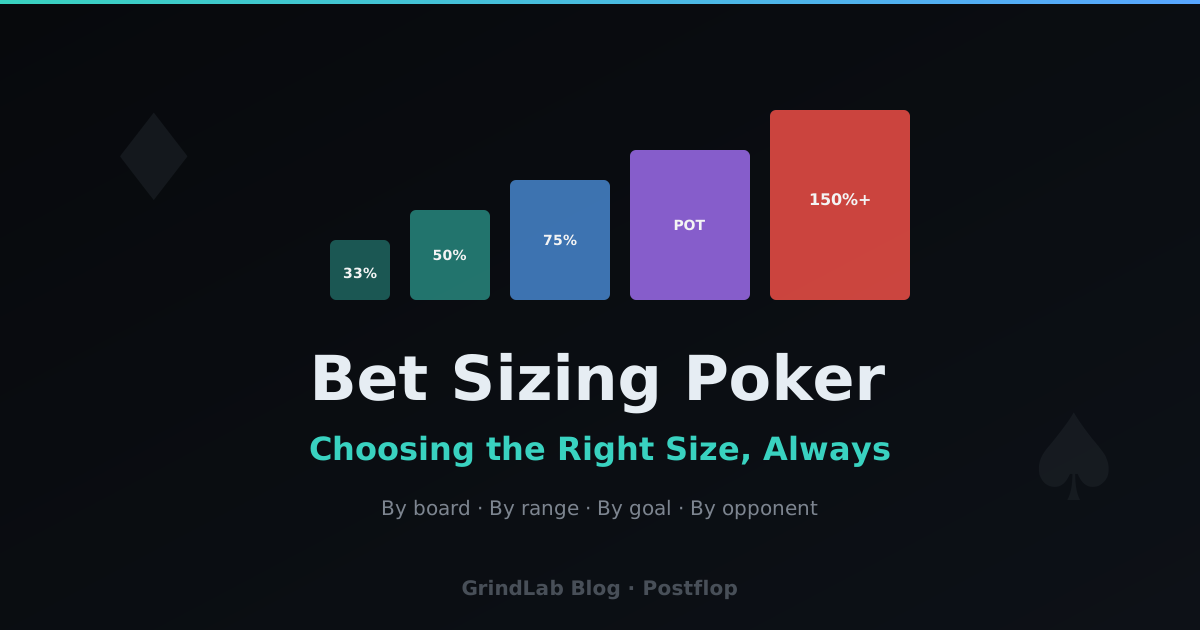
Poker Bet Sizing: When to Bet Big, Small, or Pot
Master poker bet sizing: when to choose a small bet, pot-sized bet, or overbet. Strategy by street and board with concrete examples.
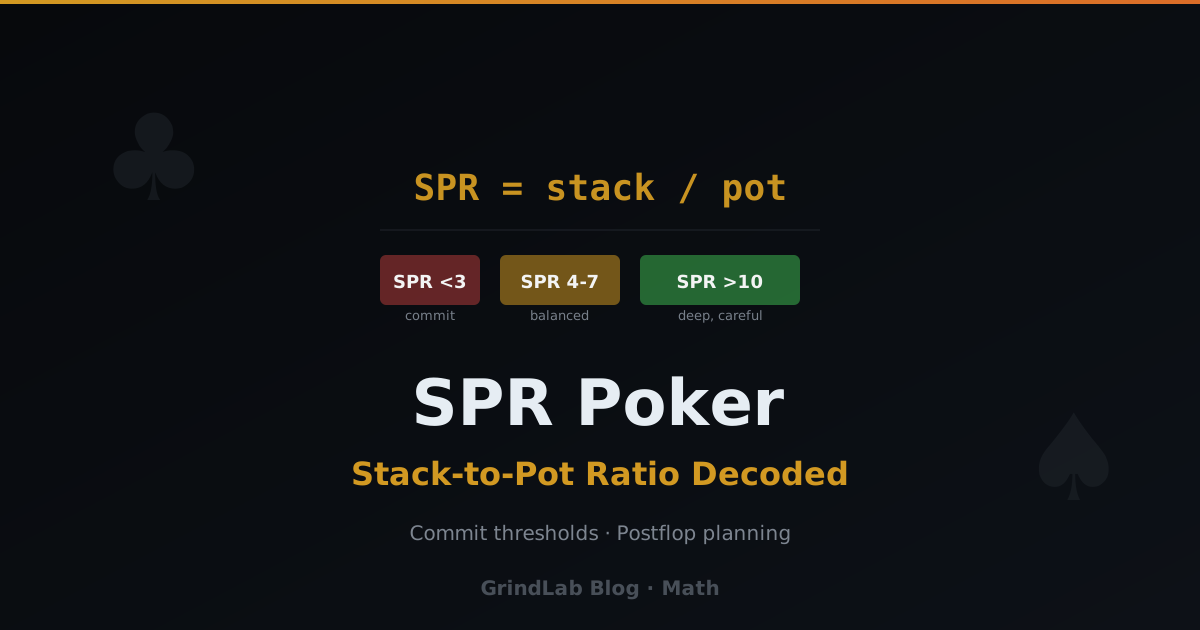
SPR in Poker: Stack-to-Pot Ratio, Calculation and Strategy
Master SPR (Stack-to-Pot Ratio) in poker: how to calculate, interpret, and adjust your postflop strategy based on effective depth.
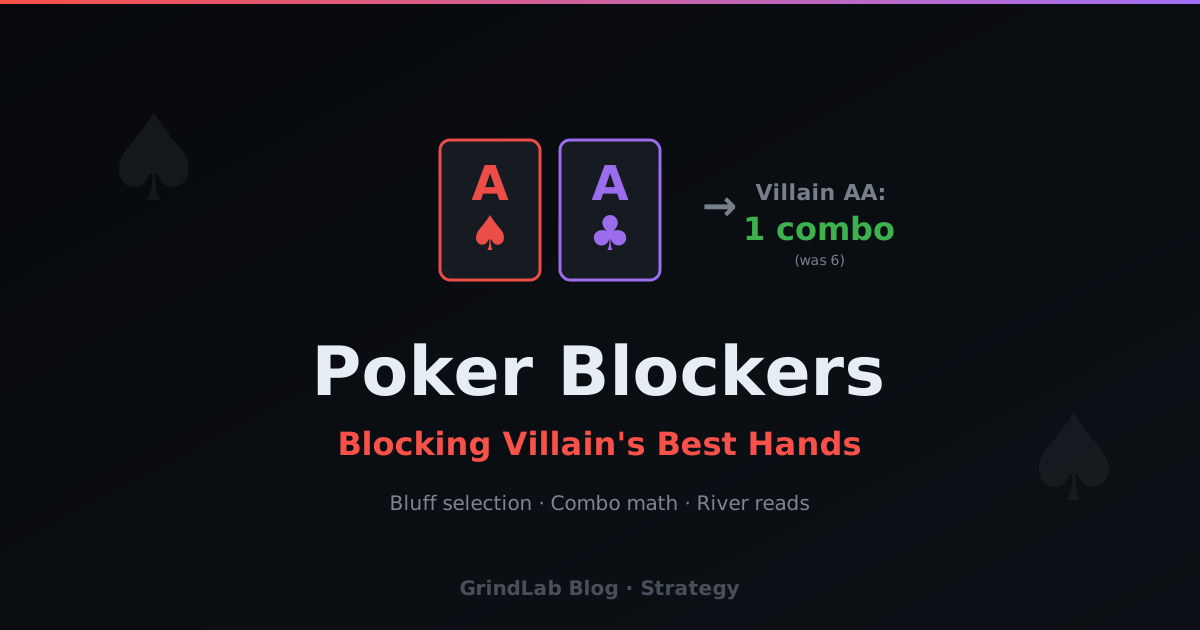
Poker Blockers: How to Use Them to Exploit
Understand poker blockers: which cards reduce the opponent's range, how to use them to bluff and value bet. Intermediate guide with concrete examples.
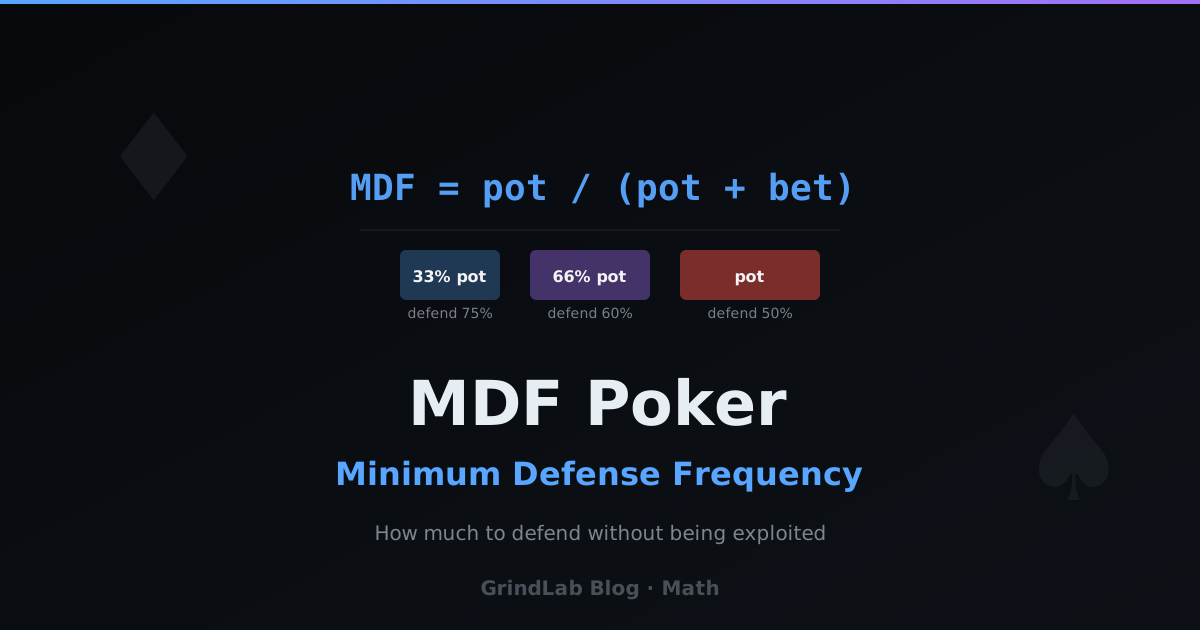
MDF in Poker: Minimum Defense Frequency Explained
Understand MDF (Minimum Defense Frequency) in poker: formula, quick calculation, and how to use it to avoid being exploited. Complete guide with calculator.
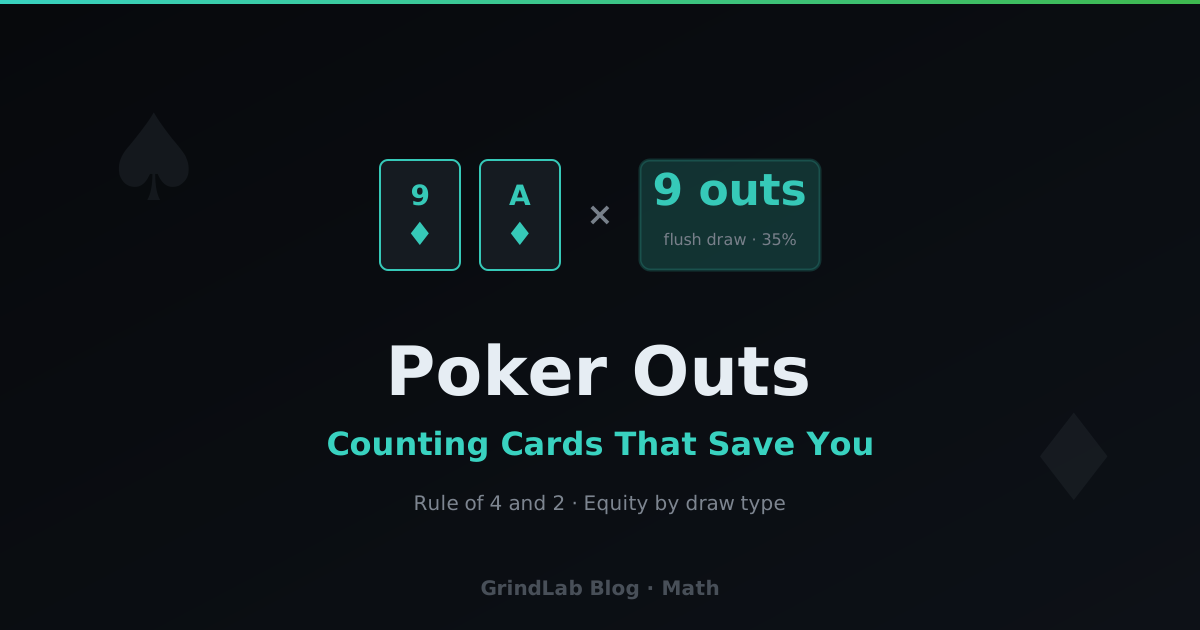
Poker Outs: Counting, Rule of 2 and 4, Complete Chart
Learn to count your outs in poker and convert them into equity with the rule of 2 and 4. Complete reference chart and concrete examples.
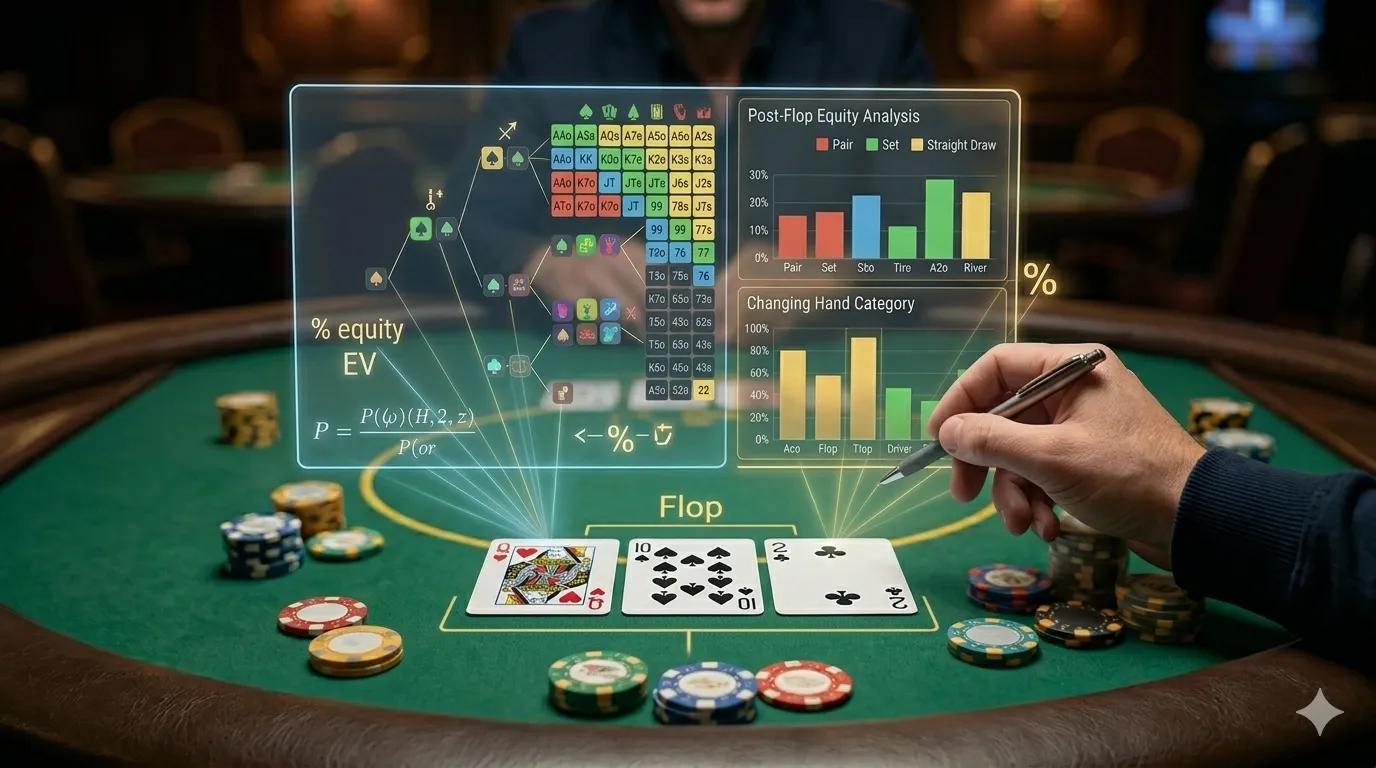
The C-Bet in Poker: When, How and Why
Master the continuation bet in poker. Learn when to c-bet, what sizing to use, on which boards, and how to adjust against different opponent types.
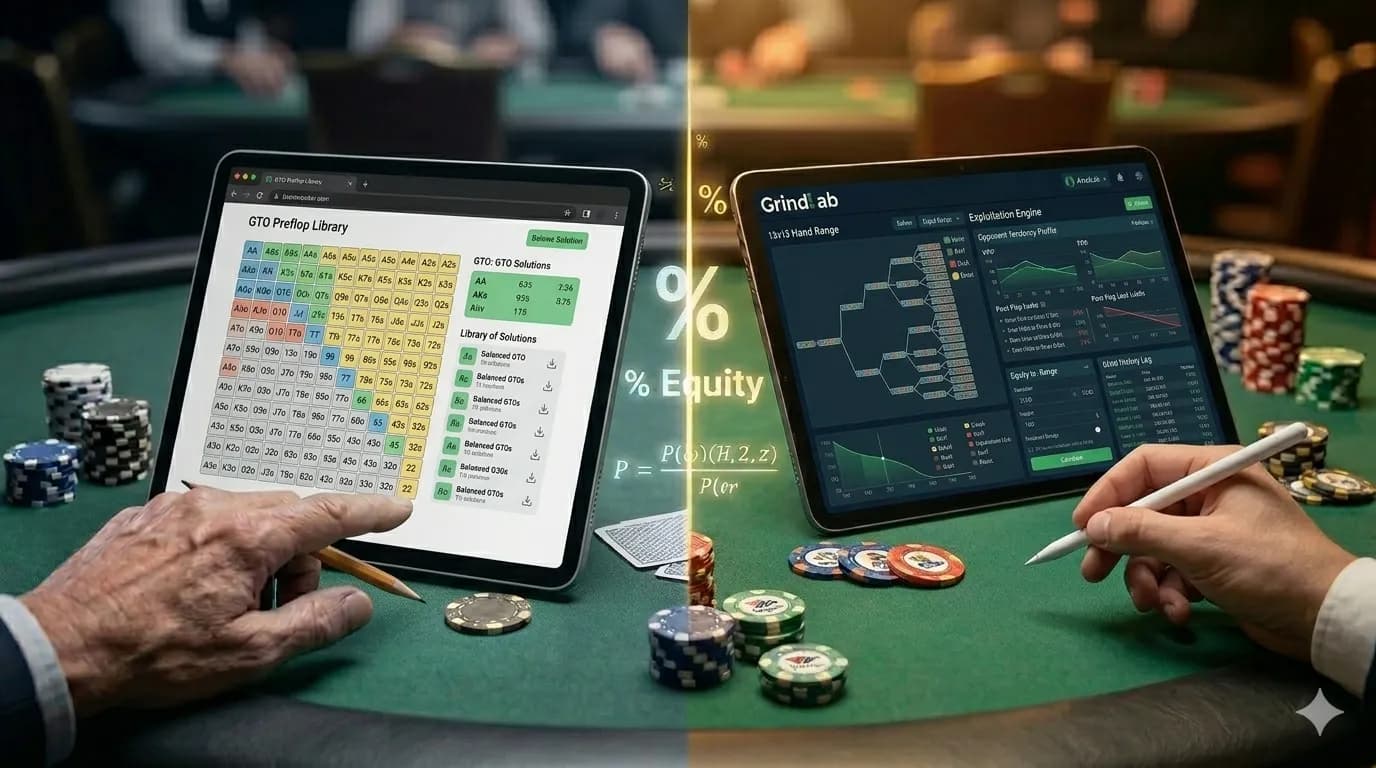
GTO vs Exploitative Poker: Which Approach Should You Choose?
GTO or exploitation? Understand both approaches of modern poker, when to use each, and how to combine them to maximize your winnings.
ICM in Poker: Understanding the Independent Chip Model
ICM explained simply: how to convert tournament chips into real money, why lost chips are worth more than won chips, and how to adjust your strategy.
Poker Rake Comparison 2026: Every Room Analyzed
Complete 2026 cash game rake comparison — French ANJ sites and international rooms. Tables by limit, caps, NFND, and tips to reduce rake impact on your winrate.
How to Play Poker: Rules, Strategy & Everything You Need to Win
The complete guide to playing poker — from basic rules and hand rankings to advanced strategy concepts. Learn how to play and how to start winning.
How to Review Your Poker Sessions: A Step-by-Step Method
Stop guessing if you played well. This step-by-step method for reviewing poker sessions helps you find your leaks, fix them, and track improvement over time.
How to Study Poker: 7 Daily Habits That Actually Work
Most poker players study wrong. Here are 7 daily habits winning players use to improve faster, including the 5-minute one that matters most.
Poker Cheat Sheet 2026: All the Numbers You Need
The ultimate poker cheat sheet — hand rankings, pot odds, equity by matchup, outs chart, bet sizing math. Bookmark this page and never guess again.
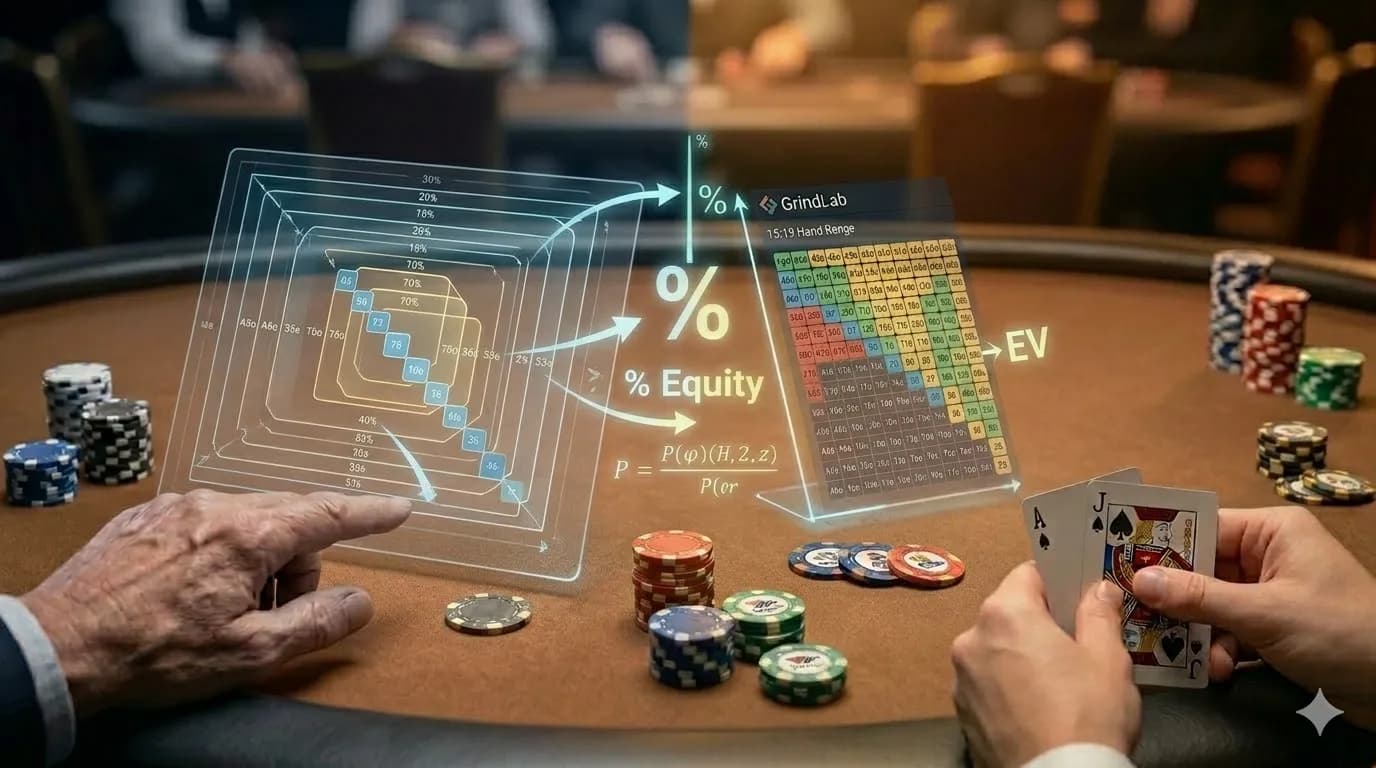
How to Build Poker Ranges: A Practical Guide
Learn how to build preflop poker ranges for every position and situation. Step-by-step method with examples, charts, and a free range builder tool.
Implied Odds in Poker: When to Call Without Direct Odds
Implied odds let you call profitably even when pot odds fall short. Learn how to calculate them, when to use them, and common traps to avoid.
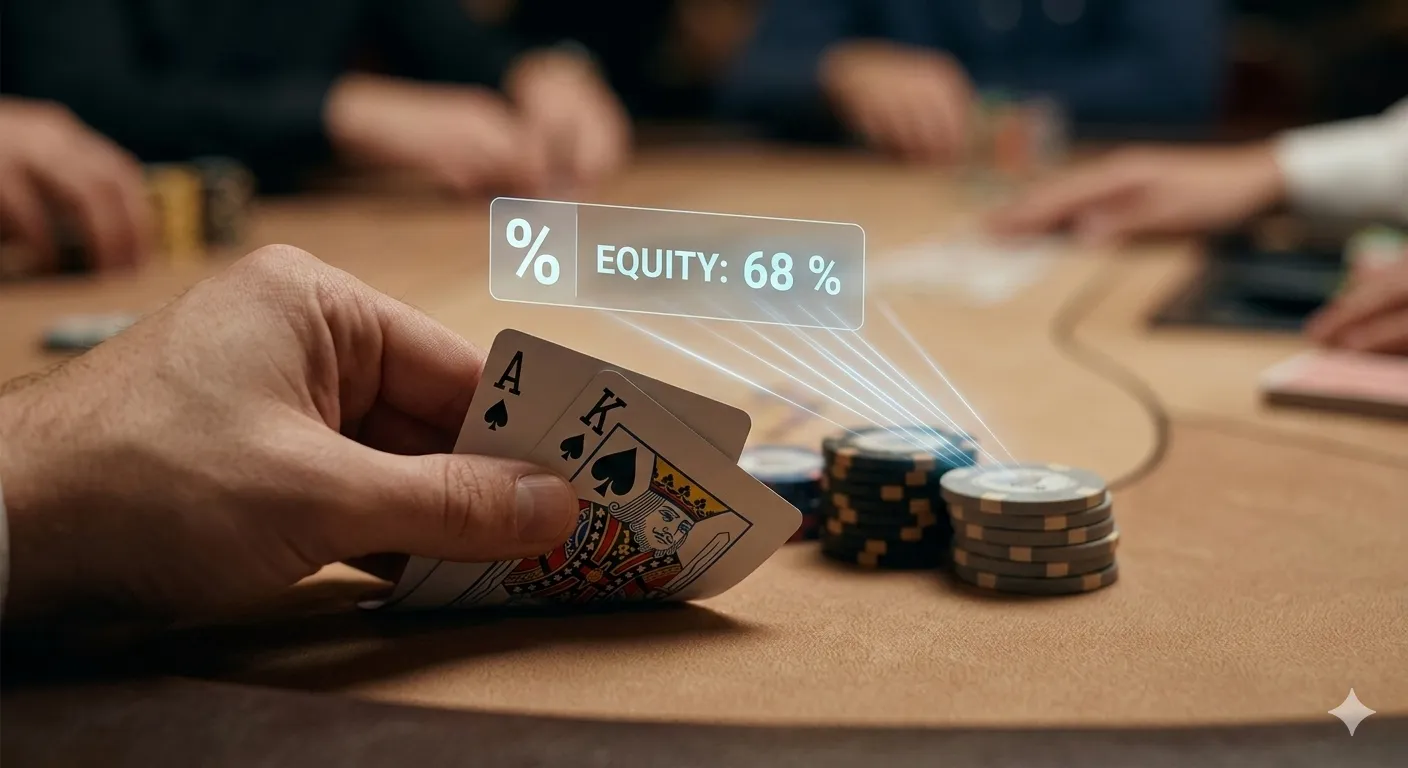
Poker Equity Explained: How to Calculate & Use It
Learn what equity is in poker, how to calculate it using outs, the Rule of 2 and 4, and how to apply it to make better decisions. Free equity calculator inside.
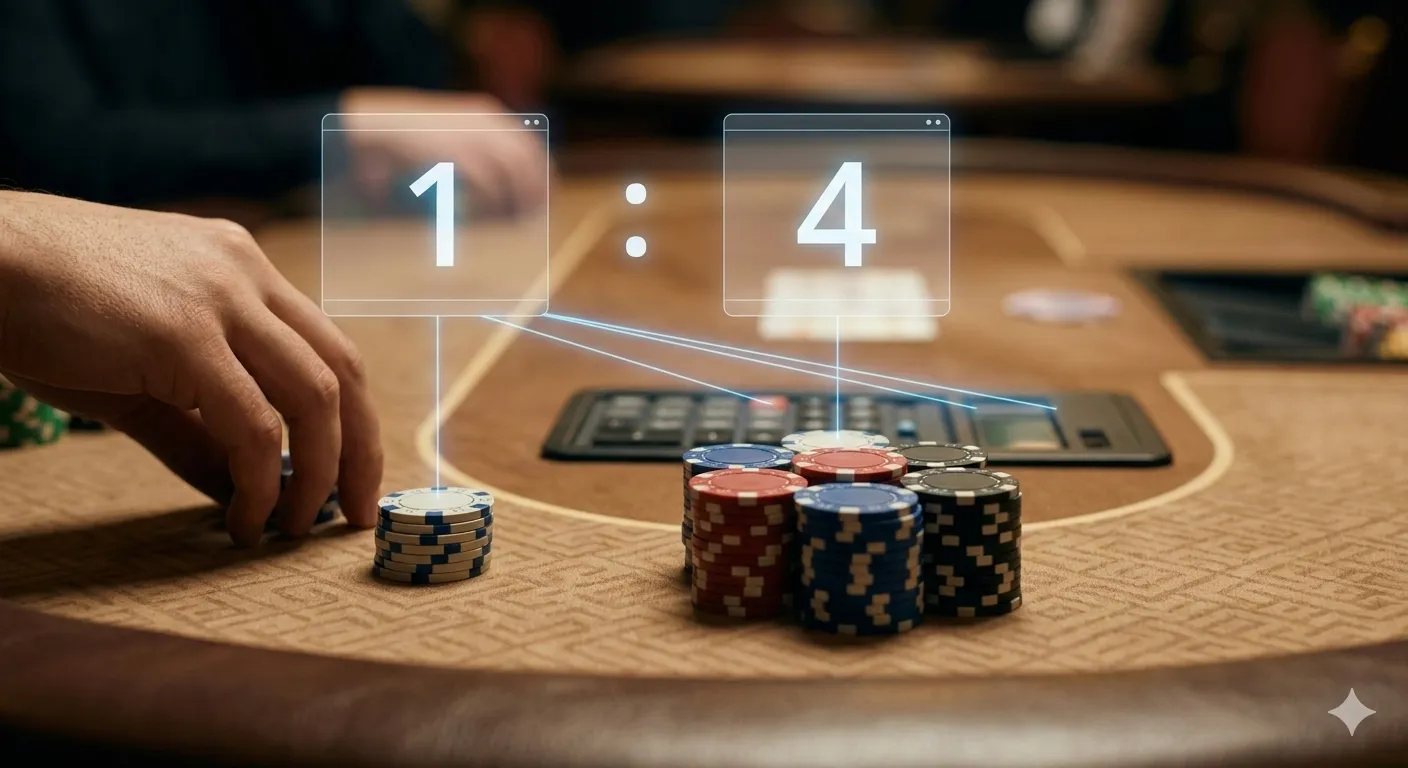
Pot Odds in Poker: How to Calculate & Apply Them (With Examples)
Learn the pot odds formula, see worked examples by street, and practice with GrindLab's free calculator. Quick reference table included.