Small Blind Poker Strategy: Limiting Losses in the Worst Seat
Open your statistics by position and the small blind is almost always the reddest line. It is neither chance nor a sign of bad play: it is the most unfavourable seat at the table, and it loses money for almost every player. So the question is not "how do I win in the small blind" but "how do I lose as little as possible there". And the gap between a player who loses 15 bb/100 there and one who loses 6 bb/100 is often enough to change an overall win rate.
This small blind strategy guide is part of our cash game strategy series. It covers the three small blind situations: facing an open, when everyone has folded to you, and facing limpers.
Why the small blind loses money
Three handicaps stack up.
1. You pay before seeing your cards. The half blind goes in every orbit. You cannot fold an unplayable hand for free.
2. You play out of position against everyone. After the flop, the small blind acts first. Against the opener, the button and even the big blind, you always decide before your opponent, which reduces your ability to realise your equity.
3. The big blind still acts behind you. Preflop, your decision is not the last one. A call can be followed by a big blind squeeze, forcing you to fold the money you just added.
The reference win rates by position, recalled in our article on poker win rate in bb/100, put the small blind between minus 15 and minus 5 bb/100. The two blinds are the only seats that lose money for almost everyone.
Situation 1: facing an open
The problem with calling
Take a button open to 2.5 bb. The small blind considers calling.
- Pot before your decision: 2.5 + 0.5 + 1 = 4 bb.
- You add 2 bb, for a pot of 6 bb.
- Required equity if nobody else acts: 2 / 6 = 33.3%.
But that figure ignores two things. The big blind can still raise and make you lose your call. And even if it just calls, you play a three-way pot out of position against two opponents. Calling from the small blind is one of the least profitable lines in the game.
The answer: 3-bet or fold
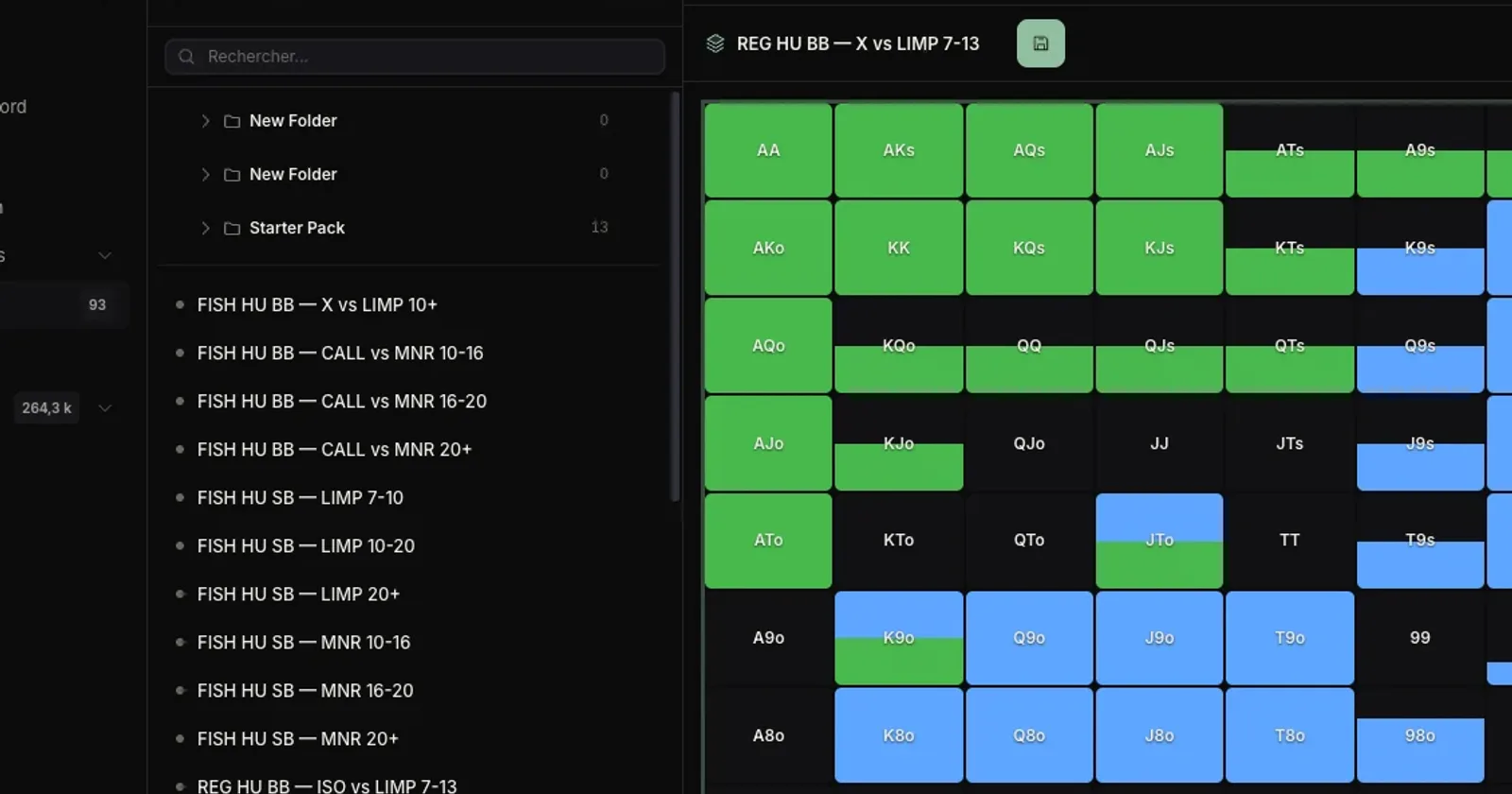
The reference strategy against an open is to 3-bet or fold, with very few calls. The 3-bet has three advantages: it gives you the initiative, it isolates the opener by pushing the big blind out, and it often wins the pot immediately, which removes the positional disadvantage.
Reference frequencies from our 3-bet poker guide for the small blind against the button: 10 to 12% against a tight opener, 12 to 14% as standard, 15 to 18% against a loose opener.
Sizing
Out of position, you want to make your opponent's call less attractive. The small blind 3-bet is therefore bigger than an in position 3-bet, around 4 times the open: about 10 to 11 bb against a 2.5 bb open.
By opener position
| Opener | Opponent's opening range | Small blind strategy |
|---|---|---|
| UTG | Tight | Tight value 3-bets, very few bluffs, a few calls with pairs and suited AQ depending on the table |
| HJ | Tight to medium | Value 3-bets, a few bluffs with suited aces |
| CO | Medium | Wider 3-bets, bluffs with blockers |
| BTN | Wide | Wide 3-bets, value and bluffs |
Against early positions, the opponent's range is strong and your 3-bet bluffs have little fold equity. Against the button, which opens almost half its hands according to our poker open ranges by position, the small blind can re-raise much more.
When calling still works
Some hands keep value as a call against a button open, especially with a passive big blind: medium pairs looking for a set, and a few strong suited hands. The more often the big blind squeezes, the less profitable those calls become.
Facing the 4-bet
If the opener re-raises your 3-bet, you face a 4-bet out of position. Only continue with hands that can call off a stack or play well out of position in a bloated pot. The bluffs in your 3-bet range fold.
Situation 2: everyone folds to you
This is the blind versus blind spot: two wide ranges, a single opponent, the big blind, who already has a full blind in the pot.
Raise only or mixed strategy
Two approaches coexist, compared in detail in our blind vs blind guide.
- Raise only: you raise or fold. Our reference ranges put the small blind open at 30 to 40% of hands, with a 3 bb sizing. It is simple, robust and suited to multi-tabling.
- Mixed strategy: you raise part of your range and limp another part. The range you play becomes much wider, because many weak hands move from fold to limp. Theoretically superior, it requires a good out of position game and suffers against a big blind that attacks limps.
What a steal needs to achieve
A 3 bb open risks 2.5 more bb to win the 1.5 bb in the pot. As a pure bluff, it is profitable if the big blind folds more than 2.5 / 4 = 62.5% of the time. Against a big blind that defends well, that is not the case: your open must therefore contain enough hands that make money when called.
Adjusting to the big blind
| Big blind | Small blind adjustment |
|---|---|
| Folds too much | Open almost every hand |
| Defends wide but passive postflop | Open for value, bet thin postflop |
| 3-bets often | Tighten your open, widen your value 4-bets |
| Attacks limps | Avoid limps, switch to raise only |
Situation 3: facing limpers
When one or more players have limped, completing the small blind only costs half a blind. The price looks attractive, but you will play a multiway pot out of position, which cuts the value of marginal hands.
- With a strong hand, raise big to isolate, like an iso-raise, adding one blind per limper to your usual sizing.
- With a speculative hand, such as a small pair or a suited connector, completing can be justified against passive limpers, with the aim of hitting hard.
- With a weak offsuit hand, fold: the half blind already in does not justify playing out of position against several opponents.
Postflop from the small blind
Out of position against everyone
After the flop, you always act first. Three principles limit the damage.
- Check more often in pots where you called. Your range is capped and you do not have the range advantage.
- Bet with the initiative when the board favours you. After your 3-bet, you hold the range advantage on high boards.
- Control the pot size with medium hands. Out of position, second pair does not want to play a big pot.
In 3-bet pots
A called 10 or 11 bb 3-bet leaves an SPR of about 4 at 100 big blinds. Top pairs often commit for stacks, medium hands play carefully. How these pots work is detailed in our guide on facing a 3-bet, seen from the opener's side, and in our postflop poker strategy pillar.
Building your small blind ranges
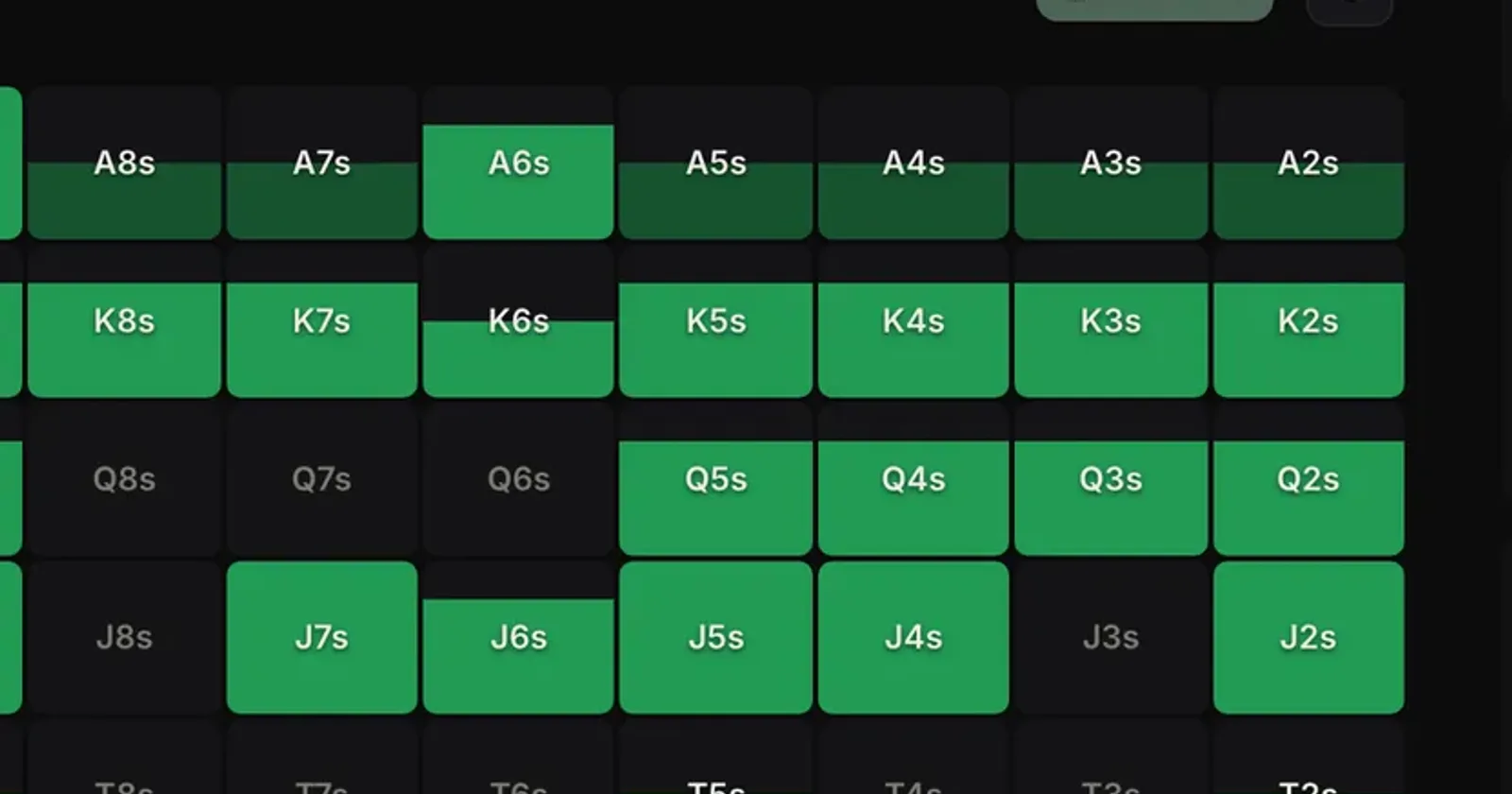
The small blind needs specific ranges for each situation: 3-bets against each position, blind versus blind opens, defence against a big blind 3-bet. Our guide on how to build poker ranges explains how to organise them. The preflop range charts display them for free, with no account needed, so you can review them between sessions.
Measuring your small blind
The small blind is the seat where results tracking speaks loudest. Three figures to watch:
- Small blind win rate: well below minus 15 bb/100 over a large sample, it points to a leak.
- Call frequency against opens: when high, it reveals the most common flaw.
- Results in blind versus blind pots: they tell you whether your opens and postflop play hold up against the big blind.
GrindLab Tracker, GrindLab's free desktop app for Windows and macOS, imports your hands automatically and calculates your win rate by position. The Free plan shows the last 30 days; full history is part of the Grinder plan, presented on the pricing page.
Classic mistakes
1. Calling opens too often. Calling exposes you to the squeeze and to three-way out of position play.
2. 3-betting too small. Out of position, a small 3-bet gives your opponent an excellent price to call.
3. Completing with anything behind limpers. Half a blind does not justify playing a weak hand multiway out of position.
4. Limping with no plan against an aggressive big blind. The limp becomes an invitation to get raised.
5. Trying to make money in the small blind. The realistic goal is to lose less, not to become a winner there.
Key takeaways
- The small blind is the most unfavourable seat: out of position postflop, the big blind behind, half a blind already in.
- Against an open, favour 3-bet or fold, with a 3-bet of about 4 times the open.
- When it folds to you, open 30 to 40% raise only, or move to a mixed strategy if you master it.
- A 3 bb steal must make the big blind fold more than 62.5% of the time to win as a pure bluff.
- Measure your small blind win rate: the goal is to limit losses.
To see what you really lose in the small blind, download GrindLab Tracker for free: it calculates your win rate by position from hands imported automatically.