How to Beat Poker Micro Stakes: the Method from NL2 to NL10
Micro stakes have a paradoxical reputation. Everyone says they are easy, yet most of the players sitting there lose money. The reason is simple: people often apply a strategy designed for solid opponents, when NL2 to NL10 opponents have massive, repeated and predictable flaws. To beat micro stakes takes less advanced theory than discipline.
This article is part of our cash game strategy series. It gathers the adjustments that pay the most at the lowest stakes, from preflop to the river, plus the two topics players neglect: rake and measuring their results.
What micro stakes look like
Before talking strategy, describe the typical opponent. At micro stakes you mostly meet three profiles.
| Profile | Behaviour | What makes them exploitable |
|---|---|---|
| Loose recreational player | Plays many hands, calls a lot | Calls too much, rarely bluffs coherently |
| Tight passive player | Plays few hands, calls often, rarely raises | Their raises almost always mean a strong hand |
| Learning regular | Decent preflop ranges, mechanical postflop | Folds too much to aggression, c-bets too often |
The common thread: opponents' aggression is rare and almost always honest, and passivity is the norm. It is the opposite of higher stakes, where a river raise can be a frequent bluff. Our article on poker player types explains how to recognise each type within a few dozen hands.
Preflop: tight, aggressive, in position
Open by position
The first gain, and the easiest, comes from a disciplined preflop strategy. Open a tight range early and a wide one on the button, as described in our poker open ranges by position. The preflop range charts display them for free, no account needed, so you can check them between sessions.
Do not play more hands because opponents are weak. Play the right hands more aggressively. A mediocre hand played out of position without the initiative loses money even against a weak player.
Isolate limpers
Limpers are everywhere at micro stakes. Over-limping behind them is a common mistake: you play a multiway pot without the initiative, often out of position. The answer is the iso-raise: a raise larger than a standard open (usually 4 bb plus 1 bb per limper), with a range that keeps value, to play heads-up against the weakest player at the table.
3-bet for value, a lot
Micro stakes opponents call 3-bets with far too weak hands. That is a huge source of profit: a value 3-bet with AQ, suited AJ or medium pairs builds a pot against dominated hands. Conversely, 3-bet bluffs lose their appeal against players who never fold. Against them, shift your 3-bet range towards value.
Respect 4-bets
An NL5 player who 4-bets almost always holds QQ, KK, AA or AK. Folding JJ or AQ against a tight player's 4-bet is not weakness, it is reading. Our 4-bet poker guide explains how to adjust that defence to the opponent's 4-bet frequency.
Postflop: value first
Bet more often for value
The most expensive mistake of players trying to play "well" at micro stakes is checking strong hands out of fear, or to trap. Against opponents who call too much, every value hand you check is a pot that does not grow. Bet your top pair good kicker hands on three streets more often, and bet bigger: an opponent who calls with second pair often calls a two-thirds pot bet as readily as a one-third pot bet.
The principle is developed in our article on value betting in poker.
Bluff less, and only the right targets
A river bluff assumes your opponent can fold. At micro stakes, many cannot. Save your bluffs for tight players and for regulars who fold too much to aggression, on boards where your story is credible. Against the recreational player who calls everything, bluffing is money thrown away.
Take raises seriously
A turn check-raise from a passive player, a river raise from a player who has not raised all session: these lines almost always mean a very strong hand. The most common flaw of micro stakes regulars is calling those raises "to see". Over thousands of hands, those calls cost whole bb/100.
Pot odds still rule
Folding more to aggression does not mean ignoring the maths. A call is justified when your equity against your opponent's range exceeds the price set by the pot odds. What changes at micro stakes is the range you assign: tighter than theory when they raise, wider than theory when they call.
The adjustments in one table
| Situation | Balanced strategy | Micro stakes adjustment |
|---|---|---|
| River value with a strong hand | Medium bet | Bigger bet |
| River bluff | Balanced frequency | Much less frequent |
| Facing a river raise from a passive player | Defend by MDF | Fold most bluff catchers |
| Facing a limper | Iso-raise | Wider and bigger iso-raise |
| Preflop 3-bet | Mix of value and bluffs | More value, fewer bluffs |
| C-bet against a calling station | Depends on texture | Bet for value, check air |
This table illustrates the trade-off between GTO and exploitative play: theory gives a baseline, and watching opponents tells you which way to deviate from it.
Rake, the first opponent at micro stakes
At NL2 and NL5, rake is proportionally higher than at any other stake. The reason is the cap, the maximum amount taken per pot. At micro stakes, a large share of pots reach or approach the cap, and the commission takes a big share of each pot.
Three practical consequences:
- Choose your site for your stake. Our poker rake comparison 2026 shows that NL2 and NL5 caps vary a lot between sites. The poker rake calculator runs the numbers for your stake.
- Win more pots before the flop. With No Flop No Drop, a pot won preflop is not raked. Opens and 3-bets that make everyone fold are therefore the most profitable pots in the game.
- Avoid marginal multiway pots. The more players, the bigger the pot, and the closer the rake gets to the cap.
Part of the rake you pay can also come back as rakeback through your site's loyalty programme. Our guide to poker rakeback explains how to value it.
Volume and measurement
Why your impression is not enough
Micro stakes have a trap: you can be winning or losing for thousands of hands without it reflecting your level. Over 10,000 hands, the margin of error on a win rate is around 10 to 15 bb/100. In other words, a plus 10 bb/100 player may well be a break-even player who ran well. Our article on poker win rate in bb/100 gives the sample sizes you need to draw conclusions.
What to look at
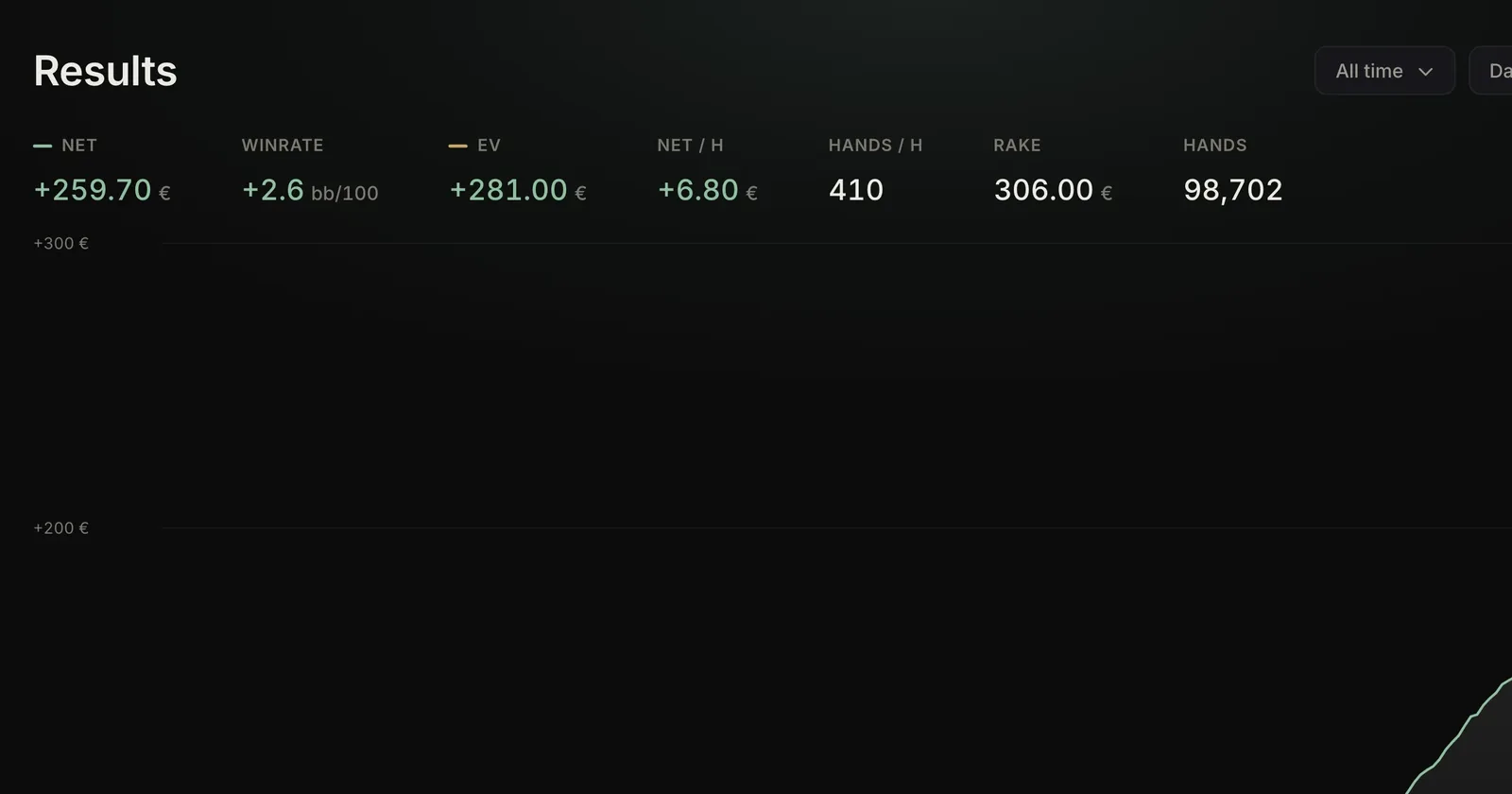
- Net EV, which corrects for luck in all-ins: it tells you whether you play well, regardless of the cards.
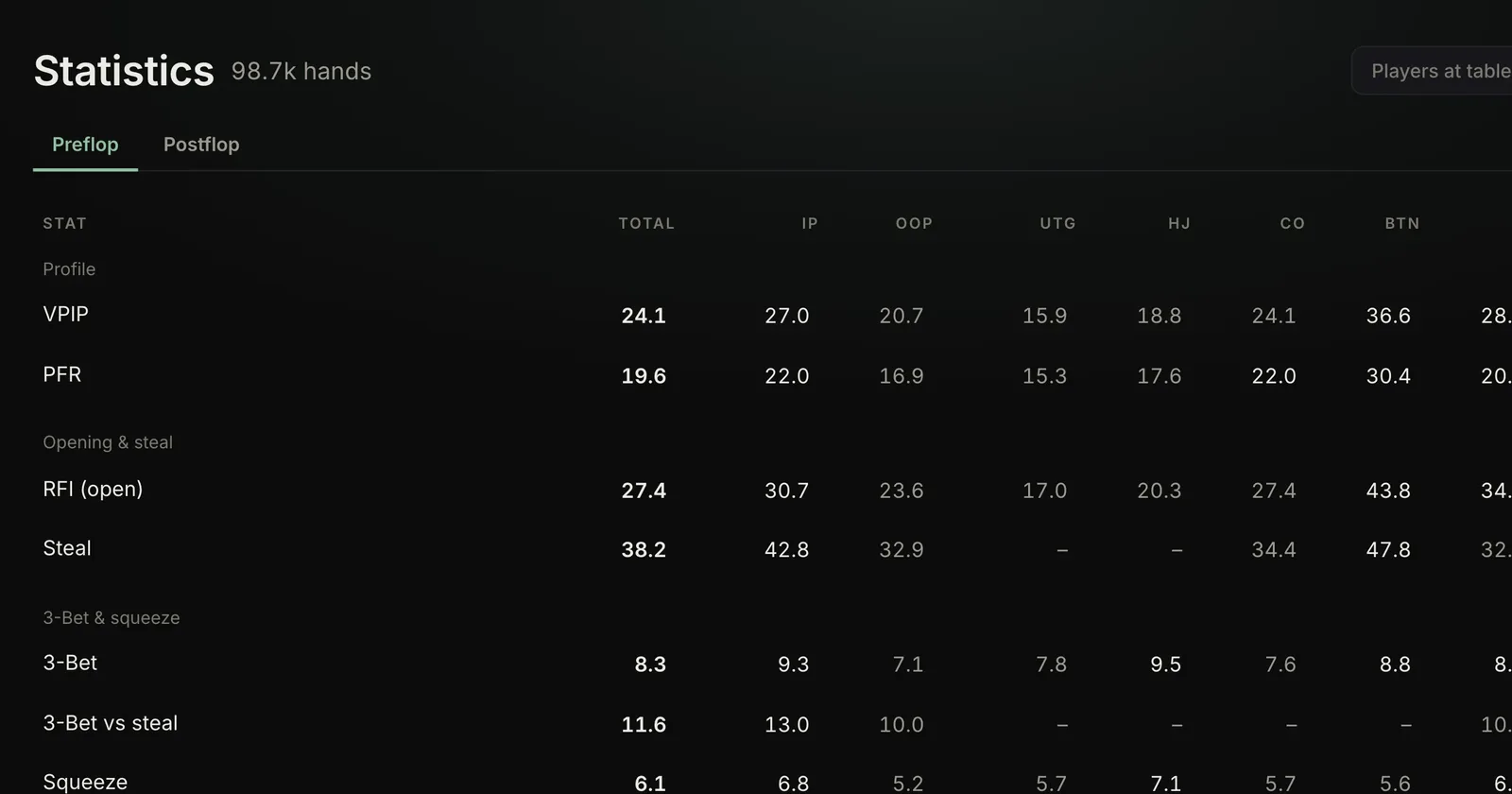
- Win rate by position: a small blind or big blind losing far more than the reference points to a specific leak.
- Non-showdown net: when it is very negative, it often signals play that is too passive or too many folds to aggression.
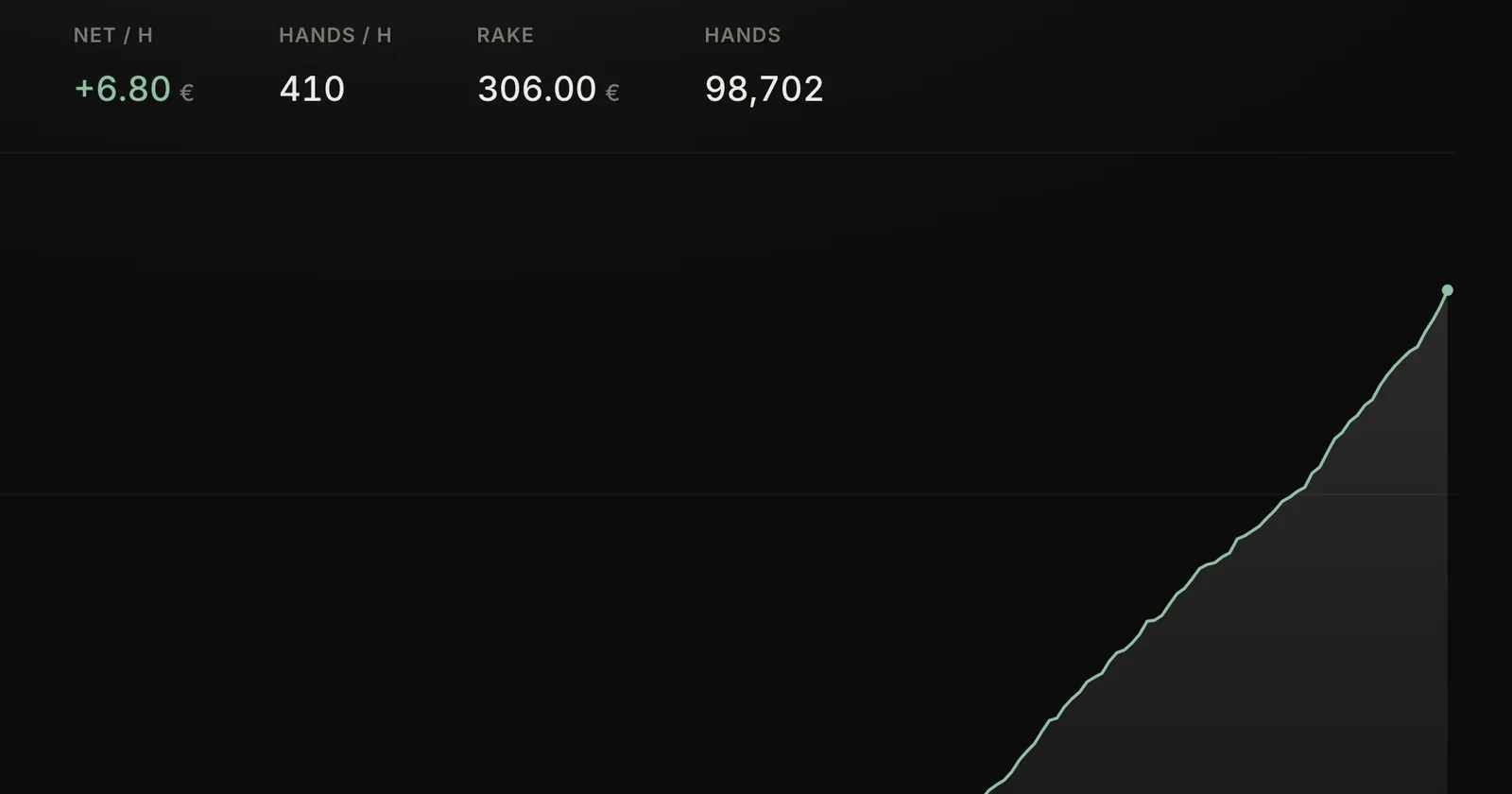
GrindLab Tracker imports your hands automatically while you play, on Windows and macOS, and calculates these figures with no manual entry. The Free plan shows the last 30 days; full history and other units are part of the Grinder plan, detailed on the pricing page.
How many tables
Multi-tabling increases your volume but reduces your attention. At micro stakes, where profit comes from watching opponents, playing too many tables makes you miss exactly what pays. Start with two to four tables and add more only if your win rate holds over a serious sample.
Bankroll and mindset
Bankroll
Micro stakes are the ideal place to build a bankroll, as long as you respect it. Plan for at least 30 buy-ins for the stake you play if you want to progress seriously, and only move up once your bankroll covers the next stake. The full rules are in our guide to poker bankroll management.
Tilt
Losing a stack to a player who called three streets with an absurd hand is daily life at micro stakes. It is also proof the strategy works: that player will pay you over time. The real danger is the reaction, the session stretched out to "get it back". Our guide to tilt control in poker offers a simple stop protocol.
When to move to the next stake
Moving from NL10 to NL25 marks a clear change: more regulars, more frequent 3-bets, opponents who bluff more. Move up when:
- your win rate is positive over several tens of thousands of hands;
- your bankroll covers the new stake;
- your EV results confirm your actual results.
Our plan for moving up stakes from NL10 to NL50 sets out the steps, thresholds and the matching study routine.
Classic micro stakes mistakes
1. Bluffing players who call everything. The most expensive one. Identify the players who fold before you bluff.
2. Calling passive players' raises. A rare raise is a strong raise. Folding medium hands against it is often correct.
3. Playing too many hands out of position. Weak opponents do not make up for the positional disadvantage.
4. Checking value hands. Opponents call: make them pay.
5. Ignoring rake. The choice of site can change a player's result with an identical strategy.
6. Judging your level on a few thousand hands. Measure over a real sample.
Key takeaways
- Micro stakes opponents are passive and call too much: value pays more than bluffing.
- Play tight and aggressive, isolate limpers and 3-bet wide for value.
- A raise from a passive player almost always means a strong hand.
- Rake weighs more than at any other stake: choose your site by its caps.
- Measure your results over a large sample, with net EV and win rate by position.
To see where you win and where you lose at micro stakes, download GrindLab Tracker for free: it imports your hands while you play and calculates your win rate by position.